


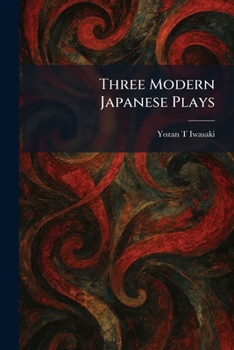
Three Modern Japanese Plays

Select Format
Select Condition 
Book Overview
"Three Modern Japanese Plays" offers a compelling glimpse into the evolving landscape of Japanese theater during the early twentieth century. This collection features significant works that reflect the shifting cultural and social dynamics of the Taisho era, a period marked by the tension between traditional Japanese values and the increasing influence of Western literary realism. These plays provide English-speaking audiences with a rare opportunity to explore the psychological depth and modern sensibilities of Japanese playwrights as they moved away from classical forms toward contemporary storytelling.
The anthology delves into themes of ambition, mental health, and social class, showcasing a burgeoning movement in Japanese literature that sought to address the complexities of modern life. As a historical and literary document, "Three Modern Japanese Plays" remains an essential resource for students of world drama and those interested in the cross-cultural exchange of the early 1920s. The work serves as an important bridge between the traditional aesthetics of the East and the modernist trends that were beginning to reshape global theater at the time of its publication.
This work has been selected by scholars as being culturally important, and is part of the knowledge base of civilization as we know it. This work was reproduced from the original artifact, and remains as true to the original work as possible. Therefore, you may see the original copyright references, library stamps (as most of these works have been housed in our most important libraries around the world), and other notations in the work.
This work is in the public domain in the United States of America, and possibly other nations. Within the United States, you may freely copy and distribute this work, as no entity (individual or corporate) has a copyright on the body of the work.
As a reproduction of a historical artifact, this work may contain missing or blurred pages, poor pictures, errant marks, etc. Scholars believe, and we concur, that this work is important enough to be preserved, reproduced, and made generally available to the public. We appreciate your support of the preservation process, and thank you for being an important part of keeping this knowledge alive and relevant.
Customer Reviews
ThriftBooks ® and the ThriftBooks ® logo are registered trademarks of Thrift Books Global, LLC
