


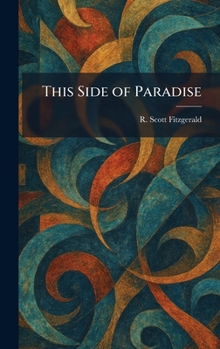
This Side of Paradise

"This Side of Paradise" is the definitive debut novel that launched the career of F. Scott Fitzgerald and defined a generation. The story centers on Amory Blaine, a precocious and pampered youth whose journey through the prestigious halls of Princeton University and the shifting social landscape of the post-World War I era serves as a microcosm for the American experience in the early 20th century. As Amory pursues various romantic interests and grapples with his fluctuating social standing, he undergoes a profound intellectual and emotional transformation.
The novel is celebrated for its experimental form, incorporating prose, poetry, and dramatic scripts to paint a vivid picture of the emerging "Jazz Age." It captures the restlessness of the "Lost Generation," a demographic disillusioned by war and searching for new certainties in an era of rapid modernization and changing moral standards. By examining themes of vanity, love, and self-discovery, "This Side of Paradise" provides an enduring critique of the American Dream. This work stands as a cornerstone of modern literature, offering a lyrical and poignant exploration of the transition from youth to maturity amid the backdrop of a world in flux.
This work has been selected by scholars as being culturally important, and is part of the knowledge base of civilization as we know it. This work was reproduced from the original artifact, and remains as true to the original work as possible. Therefore, you may see the original copyright references, library stamps (as most of these works have been housed in our most important libraries around the world), and other notations in the work.
This work is in the public domain in the United States of America, and possibly other nations. Within the United States, you may freely copy and distribute this work, as no entity (individual or corporate) has a copyright on the body of the work.
As a reproduction of a historical artifact, this work may contain missing or blurred pages, poor pictures, errant marks, etc. Scholars believe, and we concur, that this work is important enough to be preserved, reproduced, and made generally available to the public. We appreciate your support of the preservation process, and thank you for being an important part of keeping this knowledge alive and relevant.
Customer Reviews
ThriftBooks ® and the ThriftBooks ® logo are registered trademarks of Thrift Books Global, LLC
