


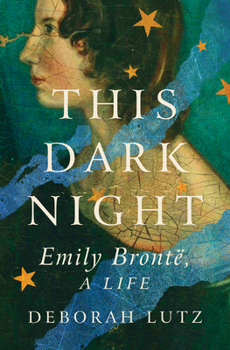
This Dark Night: Emily Bronte, a Life

Emily Bront (1818-1848) was only twenty-seven-years old when she began work on one of the most important novels in the English language. Two years later in 1847, she completed Wuthering Heights. It took the world almost a century to catch up to Bront 's masterpiece, and it has taken even longer to know Bront --an elusive figure, with a ghostly legacy provoked by her early death and the loss (and likely destruction) of almost all her personal papers.
Drawing on formerly inaccessible notebooks and manuscripts, This Dark Night constructs a portrait of Bront , her famous writing sisters Charlotte and Anne, and the effect of their sisters' and mother's tragic deaths. In the first full-length biography in over twenty years, renowned scholar Deborah Lutz sketches the days of a woman crafting otherworldly fiction while running her father's parsonage: writing interweaving with household work, daydreaming, and exploring the rough-hewn outdoors.
As she traces the influence of Bront 's life and work, Lutz follows how Bront 's fantastical early poems of the night sky, women rulers, and outsiders and rebels grew into the stormy, transcendent Wuthering Heights. Lutz also illuminates the overlooked ways that the legendary writer addressed debates of her time that still resonate today, including questions of gender and sexuality, race and class, and rapid industrialization set against the natural world.
From her menagerie of dogs and birds to the beloved moors that Bront wandered and later emblazoned in her novel, Lutz depicts the passions of an author at odds with convention. Uniting the domestic and the cosmic, This Dark Night plumbs the life and writing of this idiosyncratic woman, dark soul, and monumental genius.
Customer Reviews
ThriftBooks® and the ThriftBooks® logo are registered trademarks of Thrift Books Global, LLC
