


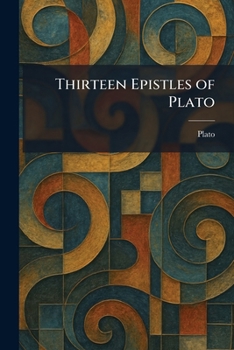
Thirteen Epistles of Plato

The collection includes the renowned "Seventh Letter", an autobiographical account of Plato's ill-fated attempts to mentor the tyrant Dionysius II of Syracuse. This specific epistle is a cornerstone for understanding Plato's political philosophy, his views on education, and the personal motivations behind his involvement in Sicilian affairs. Other letters in the collection address a range of topics, from advice to friends and political associates to reflections on the nature of wisdom and the challenges of the philosophical life.
Whether viewed as genuine historical documents or as stylistic exercises from the Platonic school, these epistles remain a vital resource for scholars and enthusiasts of ancient thought. They reveal a more human side of the philosopher, grappling with the complexities of power, friendship, and the pursuit of the "good life" in a changing world. This collection is an indispensable companion to Plato's "Republic" and "Laws", providing context and depth to his enduring intellectual legacy.
This work has been selected by scholars as being culturally important, and is part of the knowledge base of civilization as we know it. This work was reproduced from the original artifact, and remains as true to the original work as possible. Therefore, you may see the original copyright references, library stamps (as most of these works have been housed in our most important libraries around the world), and other notations in the work.
This work is in the public domain in the United States of America, and possibly other nations. Within the United States, you may freely copy and distribute this work, as no entity (individual or corporate) has a copyright on the body of the work.
As a reproduction of a historical artifact, this work may contain missing or blurred pages, poor pictures, errant marks, etc. Scholars believe, and we concur, that this work is important enough to be preserved, reproduced, and made generally available to the public. We appreciate your support of the preservation process, and thank you for being an important part of keeping this knowledge alive and relevant.
Related Subjects
History Literary Literary Criticism & Collections Literature Literature & Fiction PhilosophyCustomer Reviews
ThriftBooks ® and the ThriftBooks ® logo are registered trademarks of Thrift Books Global, LLC
