


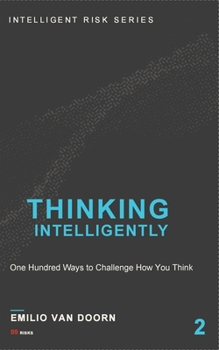
Thinking Intelligently

Thinking Intelligently is a practical collection of 100 questions, instructions and reflections designed to challenge how leaders interpret evidence, test assumptions and form conclusions under uncertainty.
Information does not become intelligence simply because it is available. What organisations believe is shaped by assumptions, bias, framing, expertise, explanation, memory and the stories used to make complex situations understandable.
Thinking Intelligently invites leaders to examine that process more deliberately. Each page contains a single prompt that can be used independently in a leadership meeting, governance discussion, workshop or decision-making conversation.
Across ten themes, the book explores evidence and scrutiny, bias and motivated reasoning, assumptions and certainty, frames and models, dissent and cognitive diversity, expertise and authority, explanations and falsehoods, patterns and prediction, narrative and hindsight, and intellectual honesty.
Rather than providing prescribed answers, the book creates space between receiving information and deciding what to believe. It encourages leaders to question what appears obvious, consider competing explanations and recognise where confidence may have moved ahead of the evidence.
Part of the six-volume Intelligent Risk Series, Thinking Intelligently is designed for executives, directors, governance professionals, risk practitioners, program leaders and decision-makers working in situations where evidence is incomplete and certainty is rarely available.
Bring one page into the conversation. Challenge not only what you know, but how you came to know it.
Customer Reviews
ThriftBooks ® and the ThriftBooks ® logo are registered trademarks of Thrift Books Global, LLC
