


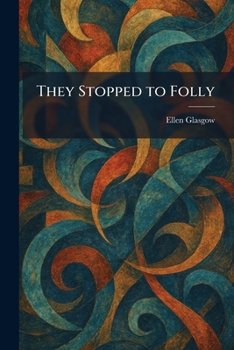
They Stopped to Folly

"They Stopped to Folly" is a sophisticated social satire that examines the shifting moral landscape of the American South during the early 20th century. Set in the fictional town of Queensborough, Virginia, this "comedy of morals" explores the concept of romantic indiscretion across three distinct generations of women. Through the sharp and ironic lens of Ellen Glasgow, the narrative dissects how the rigid Victorian standards of the past began to crumble in the face of post-war modernity and the changing expectations of women's independence.
The story follows several characters as they navigate the social fallout of their perceived "follies," contrasting the quiet shame of the older generation with the defiant attitudes of the younger Jazz Age women. Glasgow uses her signature wit to critique the hypocrisies of Southern gentility and the double standards of sexual morality that governed society. By focusing on the internal lives and external reputations of her protagonists, she creates a vivid portrait of a culture in transition. "They Stopped to Folly" remains a masterful example of American realism, offering a timeless and insightful look at the complexities of human behavior, tradition, and the pursuit of happiness against the backdrop of societal constraint.
This work has been selected by scholars as being culturally important, and is part of the knowledge base of civilization as we know it. This work was reproduced from the original artifact, and remains as true to the original work as possible. Therefore, you may see the original copyright references, library stamps (as most of these works have been housed in our most important libraries around the world), and other notations in the work.
This work is in the public domain in the United States of America, and possibly other nations. Within the United States, you may freely copy and distribute this work, as no entity (individual or corporate) has a copyright on the body of the work.
As a reproduction of a historical artifact, this work may contain missing or blurred pages, poor pictures, errant marks, etc. Scholars believe, and we concur, that this work is important enough to be preserved, reproduced, and made generally available to the public. We appreciate your support of the preservation process, and thank you for being an important part of keeping this knowledge alive and relevant.
Customer Reviews
ThriftBooks ® and the ThriftBooks ® logo are registered trademarks of Thrift Books Global, LLC
