


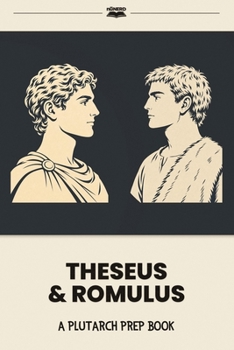
Theseus & Romulus: A Plutarch Prep Book

Theseus built Athens. Romulus built Rome. This book tells both founders' lives in full, the daring and the wrongs alike: the boy who walks into a monster's maze and finds his way back out on a single thread, the baby left to drown and saved instead by a wolf, the brother killed over a half-built wall, the girl left asleep on a beach. Then it does the thing almost no school assigns anymore. It teaches a ten- to fourteen-year-old to weigh the two lives against each other and reach a verdict of their own about what made each man great and what that greatness cost.
That weighing has a name the Greeks gave it, synkrisis, and it has gone almost entirely out of fashion. Your child learns to do it the way a real historian does: not cheering for a favorite, but setting the two founders side by side under the same hard questions, telling deliberate harm from careless harm, and holding a judgment steady when neither man comes out clean.
By the last page a reader can do things most adults cannot. Weigh two lives instead of picking a hero. Argue which wrong is worse, and say why. And catch a great writer contradicting himself: Plutarch excuses in Romulus very nearly the same crime he condemns in Theseus, and a child holding the evidence has earned the right to say so, out loud, with reasons. The book ends by handing them Plutarch's own comparison of the pair, so they can read the master's verdict and test their own against it.
A note on who this is for. It is written for a ten- to fourteen-year-old to read on their own, and it is also the fastest primer for a parent who wants to teach or discuss these lives. In an afternoon it gives you what the two stories cover, the questions the comparison turns on, and where the evidence leans, so you can lead the conversation instead of bluffing it.
Ages 10 to 14 - 96 pages - about 8,900 words - Flesch-Kincaid grade 6 - 17 black-and-white woodcut illustrations - independent reading.
A note for parents. This is the advanced rung, and it does not soften the hard evidence, because the weighing depends on it. It names plainly what Plutarch named: Ariadne abandoned, which Plutarch calls inexcusable; Romulus's twin killed at the city wall; the seizure of the Sabine women; and an ending in which Romulus is suspected of murder. War and wrongdoing are weighed, not dramatized.
Part of the nüNERD Learning System. nüNERD publishes its Plutarch pairs at four reading levels, and the Prep Book is the top rung. Ages 0-4 plant one story from each life. Ages 3-7 set the two lives side by side. Ages 6-10 tell both lives in full and begin to weigh them. And here, at 10 to 14, the reader walks the last mile to Plutarch's own pages, ready to open a grown-up translation and already know how to argue with it.
Also available for Ages 0-4, Ages 3-7, and Ages 6-10.
Customer Reviews
ThriftBooks ® and the ThriftBooks ® logo are registered trademarks of Thrift Books Global, LLC
