


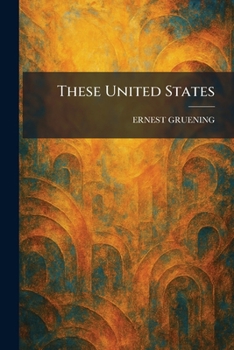
These United States

"These United States" is a comprehensive and insightful collection of essays that offers a vivid portrait of the American landscape during the early 20th century. Edited by the distinguished Ernest Gruening, this work gathers contributions from a diverse array of writers and thinkers to profile each of the forty-eight states then comprising the union. Through these individual narratives, the book explores the unique cultural, social, and economic characteristics that define the regional identities of the country.
Moving beyond mere geographical descriptions, the contributors delve into the historical roots and contemporary challenges facing each state, providing a mosaic of the American experience. This symposium captures a nation in flux, reflecting the complexities of post-World War I society and the shifting dynamics of urban and rural life. "These United States" serves as both a historical document and a literary achievement, offering readers a deep understanding of the diverse threads that weave the fabric of the American nation. It remains an essential read for those interested in regionalism, social history, and the evolution of the American identity.
This work has been selected by scholars as being culturally important, and is part of the knowledge base of civilization as we know it. This work was reproduced from the original artifact, and remains as true to the original work as possible. Therefore, you may see the original copyright references, library stamps (as most of these works have been housed in our most important libraries around the world), and other notations in the work.
This work is in the public domain in the United States of America, and possibly other nations. Within the United States, you may freely copy and distribute this work, as no entity (individual or corporate) has a copyright on the body of the work.
As a reproduction of a historical artifact, this work may contain missing or blurred pages, poor pictures, errant marks, etc. Scholars believe, and we concur, that this work is important enough to be preserved, reproduced, and made generally available to the public. We appreciate your support of the preservation process, and thank you for being an important part of keeping this knowledge alive and relevant.
Customer Reviews
ThriftBooks ® and the ThriftBooks ® logo are registered trademarks of Thrift Books Global, LLC
