


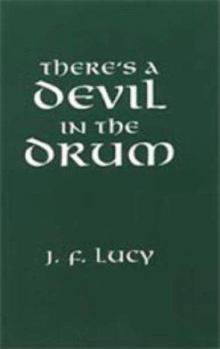
There's a Devil in the Drum

Select Format
Select Condition 
Book Overview
John Lucy, an Irishman from Cork, enlisted in an Ulster regiment, The Royal Irish Rifles, with his younger brother in January 1912, and after six months at the Depot they joined the 2nd Bn in Dover.... This description may be from another edition of this product.
Format:Paperback
Language:English
ISBN:1843421100
ISBN13:9781843421108
Release Date:February 2009
Publisher:Naval & Military Press
Length:408 Pages
Weight:1.13 lbs.
Dimensions:0.9" x 5.0" x 8.0"
Related Subjects
HistoryCustomer Reviews
4 ratings
Irish soldier in WWI
Published by Thriftbooks.com User , 16 years ago
This is a very rare viewpoint of the British army in World War I from an Irish Nationalist. There are also some interesting comments on the world of the British soldier and his lot before the war. Well written. The author was commissioned from the ranks.
an old contemptable survives the death of his regiment
Published by Thriftbooks.com User , 17 years ago
In 1914 John Lucy was that rare treasure, an NCO of a regular regiment of the British army. He was one of those men who made up the backbone of the finest professional army as the world tore itself apart, and as the world decended into the maddness of the First World War he kept a diary,and detailed in it as he watched his regiment, 2nd Battalion, Royal Irish Rifles go from 1000 men to 40 in 4 months. Lucy survived the war and later served as a professional soldier and a journalist and he writes well, going into detail of basic training and serving in the prewar army without getting bogged down in needless details or technical points. The book spans the period through 1917 but focuses especailly on the early months of the war from Mons to 1st Ypres when the bulk of the old, professional army was destroyed and then the frustration of trying to turn non-professional, war time replacements into soldier up to the standards of the pre-war professionals but more than anything this focuses on the death of the professional army. This easily belongs on the bookshelves of people with an interest in the First World War besides such famous autobiographies as those of Vera Britton, Robert Graves and Frank Richards. .
Quite a read, takes the reader vividly into the hell of the trenches.
Published by Thriftbooks.com User , 19 years ago
An astonishing first hand account of a soldier in the Great War. It starts in 1912 as a recruit in Ireland and is a very readable account of life and death in the trenches. It should be 'require' reading for any student of the 1st World War. This is a no nonsense factual account of a soldiers 'lot', from the opening phases of mobile open warfare through to the static years of trench life. It describes the death agonies of the "Old contemptibles' and the birth of Britains Citizen Armies. Breathtaking well written book I can commend and really all should read this.
An Irish Account of the Great War
Published by Thriftbooks.com User , 22 years ago
J.F. Lucy and his brother enlisted in the army in 1912. They became members of the 2nd Battalion Royal Irish Rifles of the 3rd Division. The first part of the book is an excellent account of the pre-war British army, replete with the peacetime training and traditions. Though only a N.C.O. Lucy was a keen observer of the war, looking back upon it as a bitter veteran but with a sensitive eye towards the naivete he and his comrades shared going into the war. What follows are wonderfully detailed and fascinating accounts of the early stages of the war. The destruction of the old army, as countless lives were lost following antiquated battle plans. Latter stages of the war were plagued by the attrition of trench warfare, many accounts have been written about these days, so a memoir of the first few months is extremely rare. He saw action at Mons, Le Cateau, the Marne, the Aisne and Neuve Chapelle. The latter two being poignant as the Aisne is where his brother was killed and Neuve Chapelle was where his battalion ceased to exist. He was one of only 50 men to survive the battle out of over 800. The descriptions of the last time that he saw his brother alive are priceless, as he loved his brother a great deal. He spares nothing in this account, it is graphic at times, displaying the horror of war, and the psychological stress. He later describes the first battle of Ypres and after getting his commission the futile slaughter that was Passchendaele. He describes that fateful ridge using the immortal words of Dante from the 28th canto of the Inferno: 'Who, even with words set free, could ever fully tell, by oft relating, the blood and the wounds that I now saw? Every tongue assuredly would fail because of our speech and our memory that have small capacity to comprehend so much.' Then he was off to Cambrai where his war ended, after he was hit sixteen times by an exploding shell. In subsequent years he became a journalist and later Lieutenant-Colonel in the army during World War II. This memoir is not to be missed, it is a highly underrated work that should be read by everyone. In his book "World War One Memories" Edward Lengel regards this as the finest memoir written of the First World War or possibly from any soldier ever. I give it my highest recommendation.
Copyright © 2026 Thriftbooks.com Terms of Use
| Privacy Policy | Do Not
Sell/Share My Personal Information | Cookie Policy | Cookie Preferences | Accessibility Statement
ThriftBooks® and the ThriftBooks® logo are registered trademarks of Thrift Books Global, LLC
ThriftBooks® and the ThriftBooks® logo are registered trademarks of Thrift Books Global, LLC
