Not really literary theory, but criticism categories
By Thriftbooks.com User, January 13, 2009
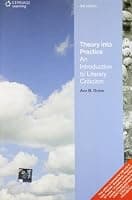
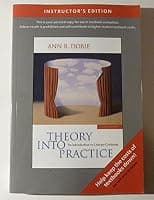
I bought this book for a literary criticism class and it fit the bill well. This book is not really about literary theory like the title may suggest, but rather it gives different types of viewpoints for criticism of literature. Some include Feminist, formalist, reader response, etc. It doesn't talk about the relationships between an author creating a text, what literature is, etc. that is more of the theory part. So if you want to know the generalized types of criticism that professors expect English majors to be able to point at and name, go for it. It's not going to teach you how to think about it abstractly.
0
★★★★☆
Do you need to write an essay?
By Thriftbooks.com User, June 26, 2008
A very well expressed and easy to understand text for formulating a college level essay, especially in literary criticism. :)
0
★★★★☆
Outstanding Literary Theory Textbook
By Thriftbooks.com User, September 26, 2007
I have direct experience with 3 literary theory texts, and I have perused another. For my purposes I find Ann Dobie's Theory into Practice to be the best of the lot. As a grad student I used Terry Eagleton's Literary Theory: An Introduction, and still regard it very highly. I have taught Steven Lynn's Texts and Contexts, which might be ideal for instructors whose students may struggle with theoretical approaches to literature. But I think Dobie's text is pitched at a higher, more challenging level and one which I prefer. However, Dobie's discourse is not quite as challenging as that found in Selden and Widdowson's Contemporary Literary Theory, which I've just examined. Ann Dobie also provides some sample literary texts at the end of her textbook so students can easily move from theory to application. And Dobie's book has other student-friendly textbook features, such as model student essays and glossaries after each chapter. The only drawback to Dobie, in my opinion, is that she does not treat structuralism in a separate chapter, presenting it as part of the historical background to deconstruction. This approach certainly makes sense, but I give my students a brief introduction to structuralism and semiotics before I teach Lacanian psychoanalysis, and I would like to be able to assign a discrete structuralism chapter before I move on to Lacan. But this is my only quibble. While each book mentioned above has something to recommend it, I think Dobie's textbook is the right choice for my students--sophomore English majors at a private, liberal arts college.
0
★★★★★
Excellent Introduction to Literary Theory
By Thriftbooks.com User, March 30, 2006
Ann Dobie presents the complexities of Literary Theory in an easy to understand and highly accessible manner. She does not talk above your head, but instead presents the information in such a way that makes even the most complex ideas accessible to students. She includes practical application strategies that aid the student in truly grasping the concepts. I had already completed my Literary Theory course when I came upon this book, and I wish I had had it earlier. It is now in my library, and I plan to use it in my own classes.