


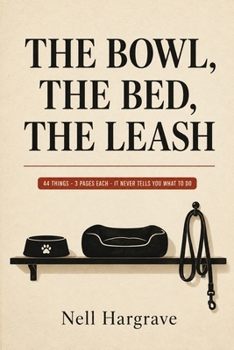
TheBowl, the Bed, the Leash

The bowl is still on the kitchen floor. Nobody writes the book about that.
There are plenty of books about grieving a dog. There is almost nothing about the part everybody actually has to get through: the house, still full of somebody's things.
Half a bag of food in the utility room that cost a lot of money. A bed in the shape of a body. The lead on the hook you pass eight times a day. Tablets in the cupboard behind the mugs. An appointment still sitting in your calendar for three weeks' time. And the question people start asking far too early, about whether there will be another dog.
This book is forty-four of those things, one at a time.
HOW EACH ONE WORKS - THREE PAGES, EVERY TIME
- WHY THIS ONE IS HARD. The specific mechanism, not a general observation about loss. A bed is the only object in the house that is shaped like somebody. A food bowl is an appointment. A lead is the one thing you both held.
- WHAT YOU CAN ACTUALLY DO. Four to six real options, listed plainly. Some of them contradict each other, and that is the point.
- WHAT USUALLY GOES WRONG, and then the permission - one line, in bold, which is almost always some version of: this can wait.
IT NEVER TELLS YOU WHAT TO DO
There is no recommended answer anywhere in this book and no page that hints at one. People keep the collar and people give everything away, and both households are fine. What you get is the options and the reasons, and then it stops.
WHAT IS ACTUALLY URGENT: THREE THINGS OUT OF FORTY-FOUR
Seal one unwashed thing that still smells of them, because smell fades whatever you do. Move the medicine out of the food cupboard. Tell the insurer. That is the whole list. Everything else is exactly as available to you in March as it is this week - and the book says so on every page.
THE THREE THINGS THAT CANNOT BE UNDONE
Washing. Deep cleaning a sofa or a car. Giving everything away in one afternoon. All three are ordinary household jobs, all three are usually done while keeping busy, and all three are the ones people most often wish they had left.
NOTHING TO SCAN. NOTHING TO DOWNLOAD.
No code, no link, no app, no companion of any kind, nothing to install and nothing waiting for you outside these covers. Everything this book has is printed on the page in front of you.
AND NOT IN HERE
No stages of grief. No timetable. No statistics or studies. No claims about where they are now, in either direction. No veterinary or medical advice, and no verdict on any decision you made - the questions that belong to your vet are named as such. And not one line suggesting that grief for an animal is a smaller kind of grief.
Nell Hargrave is not a veterinarian, not a doctor, not a psychologist and not a bereavement counsellor, and does not claim to be. There are no credentials behind this book and no research in it. What it has instead is a narrow subject, a fixed shape, and a refusal to recommend anything.
Customer Reviews
ThriftBooks ® and the ThriftBooks ® logo are registered trademarks of Thrift Books Global, LLC
