


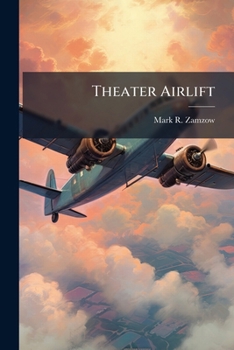
Theater Airlift: Are We Realizing Its Full Potential?

The transfer of theater airlift assets from the Military Airlift Command (MAC) and the Air Mobility Command (AMC) to the theater commanders in 1992 and 1993 was an appropriate reallocation of forces. However, there is more to theater airlift than just accepting the aircraft. The key to successful airlift operations is utilization of an effective airlift management system. Because the theaters had not controlled airlift since 1974 and therefore initially lacked any substantial expertise in theater airlift, they essentially tried to construct their own airlift system rather than duplicate the system that AMC utilizes. As a result, theater airlift has floundered and several issues have emerged regarding command and control capabilities, en route support capabilities, major command relationships, and theater airlift doctrine. To alleviate the current problems that exist regarding theater airlift and to help realize the full potential of theater airlift, the following actions should be taken: 1) establish deployable "enhanced" Airlift Control Elements (ALCEs) in each theater which are managed by the theaters instead of AMC, 2) embrace the seamless logistics system concept and implement it in each theater, and 3) update and revise theater airlift doctrine to blend with the post-Cold War strategy of U.S. military forces.
This work has been selected by scholars as being culturally important, and is part of the knowledge base of civilization as we know it. This work was reproduced from the original artifact, and remains as true to the original work as possible. Therefore, you will see the original copyright references, library stamps (as most of these works have been housed in our most important libraries around the world), and other notations in the work.
This work is in the public domain in the United States of America, and possibly other nations. Within the United States, you may freely copy and distribute this work, as no entity (individual or corporate) has a copyright on the body of the work.
As a reproduction of a historical artifact, this work may contain missing or blurred pages, poor pictures, errant marks, etc. Scholars believe, and we concur, that this work is important enough to be preserved, reproduced, and made generally available to the public. We appreciate your support of the preservation process, and thank you for being an important part of keeping this knowledge alive and relevant.
Customer Reviews
ThriftBooks ® and the ThriftBooks ® logo are registered trademarks of Thrift Books Global, LLC
