


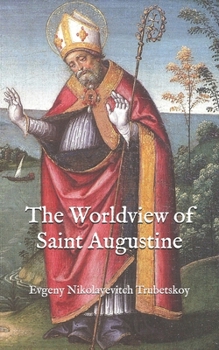
The Worldview of Saint Augustine

Saint Augustine, also known as Augustine of Hippo (354-430 A.D.), was a Roman philosopher, theologian, and bishop who profoundly influenced Western Christianity and philosophy. He is renowned for his writings on faith, reason, and politics, including The City of God and Confessions. Initially leading a non-Christian life, he later found faith, was baptized, and became a prominent figure in the Roman Catholic Church.
In this book, Trubetskoy presents a profound study of St. Augustine as the apologist of the theocratic ideal of Western Christianity. Trubetskoy traces Augustine's intellectual journey - from his struggle with Manichaean dualism, through his defense of the unity of the Church against Donatism, to his decisive battle with Pelagianism over the meaning of grace and freedom. Against the backdrop of Rome's decline and the rise of the barbarian world, Augustine's vision of the Civitas Dei emerges as a response to the crisis of civilization: a universal divine order that transcends the collapse of the earthly empire. Trubetskoy shows Augustine not only as a Father of the Church, but as the thinker who laid the foundations of medieval Catholicism, with all its strengths and contradictions. In his analysis, he reveals the depth of Augustine's religious genius, his passion for truth, his longing for God - and the tensions between his personal faith and the Latin system that history compelled him to defend.
Customer Reviews
ThriftBooks ® and the ThriftBooks ® logo are registered trademarks of Thrift Books Global, LLC
