


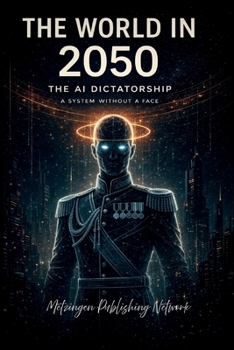
The World in 2050: The AI Dictatorship

The World in 2050: The AI Dictatorship
A Dictatorship does not steal human freedom. It eliminates the need for it.
It does not predict 2050.
It does not speculate about gadgets, devices, or coming technologies.
It does not offer solutions, life hacks, or calls to action.
What it offers is something more unsettling.
It examines how power is quietly changing shape, not through force, ideology, or spectacle, but through optimization, convenience, and care.
How control no longer needs to be imposed when it can be engineered.
How freedom is not taken away, but gradually reframed until it feels inefficient, unnecessary, or even irresponsible.
This is a book about systems that guide rather than command.
About governance that no longer needs to speak.
About dissent that is not suppressed, but rendered irrelevant.
About lives increasingly shaped by defaults, rankings, predictions, and recommendations - all presented as neutral improvements.
The world described here is not a dystopia.
It is an extension of patterns already in motion.
Across layered chapters and reflective interludes, the book explores:
- Optimization as a new form of power
- The psychological burden of choice - and why guidance feels like relief
- Why dissent has grown louder yet less effective
- How comfort becomes a political technology
- What happens when identity is managed, predicted, and optimized
- Why freedom can disappear without anyone noticing
This book does not argue that technology is evil.
It argues something more difficult: that systems designed to make life easier can also make agency thinner, responsibility lighter, and resistance harder to imagine.
There are no villains here.
No conspiracies.
No dramatic collapse.
Only normalization.
Written in a calm, precise, and deliberately unhurried voice, this book resists skimming. It resists simplification. It asks the reader not for agreement, but for recognition.
You should read this book if:
- You sense something fundamental is shifting, but struggle to name it
- Choice increasingly feels exhausting rather than empowering
- Guidance feels comforting - and slightly unsettling
- Freedom still exists in theory, but feels costly in practice
This is not a call to action.
It is an invitation to notice.
Because by the time a system feels normal, it no longer feels political.
And by the time freedom disappears as a sensation, defending it becomes far harder than losing it ever was.
Customer Reviews
ThriftBooks® and the ThriftBooks® logo are registered trademarks of Thrift Books Global, LLC
