


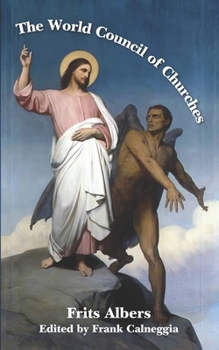
The World Council of Churches
No Customer Reviews

The World Council of Churches by Frits Albers offers a forceful theological critique of the ecumenical movement through a distinctly Catholic lens. Drawing on Scripture, Church teaching, and historical analysis, Albers examines the origins, doctrines, and global ambitions of the World Council of Churches, arguing that its vision of unity departs from apostolic faith and sacramental tradition. This work challenges readers to reflect deeply on ecclesial identity, doctrinal fidelity, and the meaning of authentic Christian unity.
Format:Paperback
Language:English
ISBN:B0GL5NB7FB
ISBN13:9798888705025
Release Date:February 2026
Publisher:En Route Books & Media
Length:108 Pages
Weight:0.25 lbs.
Dimensions:0.2" x 5.0" x 8.0"
Customer Reviews
0 rating
Copyright © 2026 Thriftbooks.com Terms of Use
| Privacy Policy | Do Not
Sell/Share My Personal Information | Cookie Policy | Cookie Preferences | Accessibility Statement
ThriftBooks® and the ThriftBooks® logo are registered trademarks of Thrift Books Global, LLC
ThriftBooks® and the ThriftBooks® logo are registered trademarks of Thrift Books Global, LLC
