


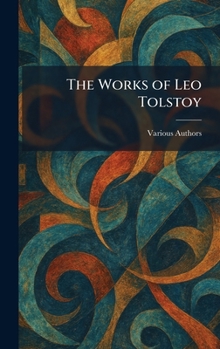
The Works of Leo Tolstoy

"The Works of Leo Tolstoi" offers a comprehensive immersion into the literary legacy of one of the greatest masters of world literature. This collection brings together the profound narratives and philosophical inquiries that defined the career of Count Leo Tolstoy, a titan of Russian realism. Readers will encounter a diverse range of prose, spanning from his epic explorations of history and society to his intimate examinations of the human soul and moral conscience.
Through masterpieces such as "War and Peace" and "Anna Karenina", Tolstoy reshaped the landscape of the modern novel, blending vast historical panoramas with minute psychological detail. In addition to these monumental works, this collection features his shorter fiction and novellas, including "The Death of Ivan Ilyich" and "The Kreutzer Sonata", which showcase his ability to confront the universal themes of life, death, faith, and redemption. Tolstoi's writing is characterized by its unflinching honesty and its pursuit of truth, making his work essential reading for anyone interested in the complexities of the human condition. These stories and essays remain as relevant today as when they were first written, continuing to challenge and inspire audiences worldwide with their depth, clarity, and enduring moral force.
This work has been selected by scholars as being culturally important, and is part of the knowledge base of civilization as we know it. This work was reproduced from the original artifact, and remains as true to the original work as possible. Therefore, you may see the original copyright references, library stamps (as most of these works have been housed in our most important libraries around the world), and other notations in the work.
This work is in the public domain in the United States of America, and possibly other nations. Within the United States, you may freely copy and distribute this work, as no entity (individual or corporate) has a copyright on the body of the work.
As a reproduction of a historical artifact, this work may contain missing or blurred pages, poor pictures, errant marks, etc. Scholars believe, and we concur, that this work is important enough to be preserved, reproduced, and made generally available to the public. We appreciate your support of the preservation process, and thank you for being an important part of keeping this knowledge alive and relevant.
Customer Reviews
ThriftBooks ® and the ThriftBooks ® logo are registered trademarks of Thrift Books Global, LLC
