


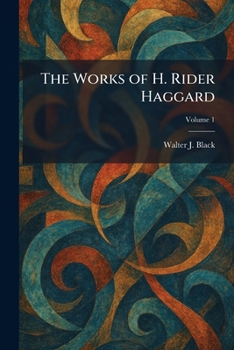
The Works of H. Rider Haggard

"The Works of H. Rider Haggard" brings together the pulse-pounding narratives of one of the most influential pioneers of adventure fiction. Known for defining the Lost World genre, Haggard's stories transport readers to untamed landscapes and ancient civilizations, blending rigorous historical detail with imaginative leaps into the unknown. This collection showcases the author's remarkable ability to weave tales of heroism, mystery, and colonial exploration that captivated the late Victorian and Edwardian imagination.
From the arid deserts and lush jungles of Africa to the hidden temples of forgotten empires, the stories within this volume explore the enduring human spirit in the face of peril. Readers will encounter legendary figures like the stalwart hunter Allan Quatermain and the enigmatic, immortal Ayesha, known as "She-who-must-be-obeyed." Haggard's work is characterized by its vivid atmosphere, philosophical depth, and a profound respect for the cultures and legends of the lands he depicted. His influence on modern fantasy and adventure literature cannot be overstated, making this an essential acquisition for those seeking the roots of high-stakes storytelling and timeless literary exploration.
This work has been selected by scholars as being culturally important, and is part of the knowledge base of civilization as we know it. This work was reproduced from the original artifact, and remains as true to the original work as possible. Therefore, you may see the original copyright references, library stamps (as most of these works have been housed in our most important libraries around the world), and other notations in the work.
This work is in the public domain in the United States of America, and possibly other nations. Within the United States, you may freely copy and distribute this work, as no entity (individual or corporate) has a copyright on the body of the work.
As a reproduction of a historical artifact, this work may contain missing or blurred pages, poor pictures, errant marks, etc. Scholars believe, and we concur, that this work is important enough to be preserved, reproduced, and made generally available to the public. We appreciate your support of the preservation process, and thank you for being an important part of keeping this knowledge alive and relevant.
Customer Reviews
ThriftBooks ® and the ThriftBooks ® logo are registered trademarks of Thrift Books Global, LLC
