


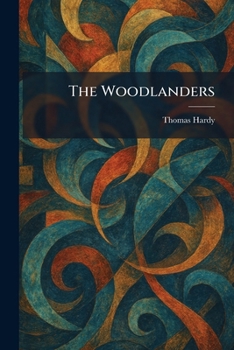
The Woodlanders


Select Format
Select Condition 
Book Overview
"The Woodlanders" is one of Thomas Hardy's most atmospheric and poignant novels, set in the secluded village of Little Hintock within the fictional landscape of Wessex. The story explores the intricate lives of people whose existence is deeply tied to the seasonal rhythms of the forest and the timber trade. At its heart is a complex web of relationships and the tension between traditional rural life and the encroaching influences of modern society.
The narrative follows Giles Winterborne, a devoted woodsman, and Marty South, a hardworking laborer, as they navigate their feelings for Grace Melbury. Grace, the daughter of a successful timber merchant, finds herself caught between her rustic upbringing and the refined expectations of her education, eventually leading her into a troubled marriage with the sophisticated but fickle Dr. Edred Fitzpiers. Hardy masterfully weaves themes of social mobility, legal injustice, and the unyielding laws of nature into this tragic tale of unrequited love and missed opportunities.
Celebrated for its rich, evocative descriptions of the natural world and its profound psychological depth, "The Woodlanders" serves as a powerful critique of Victorian marriage laws and rigid class structures. This work remains a cornerstone of 19th-century literature, offering a timeless meditation on the human condition and our connection to the environment.
This work has been selected by scholars as being culturally important, and is part of the knowledge base of civilization as we know it. This work was reproduced from the original artifact, and remains as true to the original work as possible. Therefore, you may see the original copyright references, library stamps (as most of these works have been housed in our most important libraries around the world), and other notations in the work.
This work is in the public domain in the United States of America, and possibly other nations. Within the United States, you may freely copy and distribute this work, as no entity (individual or corporate) has a copyright on the body of the work.
As a reproduction of a historical artifact, this work may contain missing or blurred pages, poor pictures, errant marks, etc. Scholars believe, and we concur, that this work is important enough to be preserved, reproduced, and made generally available to the public. We appreciate your support of the preservation process, and thank you for being an important part of keeping this knowledge alive and relevant.
Customer Reviews
4.75 Stars -- A Near Masterpiece
Disaster at the altar in the church of Hardy.
A lesser known gem of English literature
Perfectly lovely
Overlooked classic would be good for a book group
ThriftBooks ® and the ThriftBooks ® logo are registered trademarks of Thrift Books Global, LLC
