


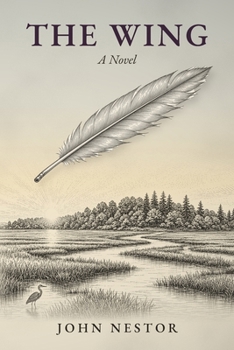
The Wing

Before he signs away the land, he will tell you whose it was.
Natick, Massachusetts, 1684. Wenepoykin, whom the English call Sagamore George and, less kindly, George No-Nose, has come home from slavery in Barbados to die in the house of a kinsman. He is the last living son of Nanepashemet, the great sachem of the Mystic, Saugus and Naumkeag shore. Now the English of Marblehead want the heirs' marks on a deed.
So George talks, in his own language, while a young Native pastor writes it down. He breaks the old rule against naming the dead, because the English believe only names that are written. He withholds just one: his mother's, which no English clerk ever recorded.
What follows is a family's story across seventy years of upheaval: a father's house raised on poles above the river, and the hilltop where he fell to raiders from the east; the Squaw Sachem, his mother, who ruled for four decades and set her mark on the deeds that made Charlestown, Cambridge and Concord; two elder brothers carried off by smallpox in a single winter; and a war that sent the praying Indians to Deer Island and a ship to the cane fields of Barbados.
Rooted in the surviving records (deeds, court depositions, Mourt's Relation, Winthrop's journal, Gookin and Eliot), The Wing gives voice to a real man whose life survives mostly in the margins of English paper. It is a novel about inheritance and loss, and about how a people's land passed from hand to hand, one signature at a time.
Includes a map of the country of Nanepashemet and a Historical Note that separates documented fact from invention.
Customer Reviews
ThriftBooks ® and the ThriftBooks ® logo are registered trademarks of Thrift Books Global, LLC
