


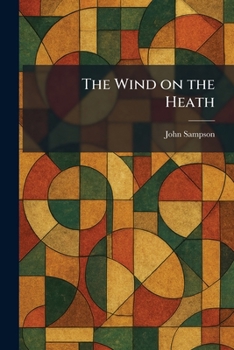
The Wind on the Heath

Select Format
Select Condition 
Book Overview
"The Wind on the Heath" is a comprehensive and evocative anthology dedicated to the lore, literature, and spirit of the Romani people. Compiled by the distinguished scholar and linguist John Sampson, this collection serves as a monumental tribute to the Gypsy way of life, drawing from a vast array of sources to capture the essence of a culture often shrouded in mystery and romanticism.
The work brings together poetry, prose, and folk traditions that celebrate the open road, the campfire, and the unique linguistic heritage of the Romani. Sampson, renowned for his deep expertise in Romani dialects, curates a selection that ranges from ancient ballads and traditional tales to observations by literary figures who were captivated by the nomadic spirit. The anthology explores themes of freedom, nature, and the enduring resilience of a people living on the margins of settled society.
A vital resource for those interested in cultural anthropology and folk history, "The Wind on the Heath" offers a window into a world of wandering. It remains a cornerstone of Romani studies, preserving the voices and stories of a vibrant community for readers and scholars alike. Through its pages, the reader encounters the beauty of the heath and the enduring legacy of the Romani spirit.
This work has been selected by scholars as being culturally important, and is part of the knowledge base of civilization as we know it. This work was reproduced from the original artifact, and remains as true to the original work as possible. Therefore, you may see the original copyright references, library stamps (as most of these works have been housed in our most important libraries around the world), and other notations in the work.
This work is in the public domain in the United States of America, and possibly other nations. Within the United States, you may freely copy and distribute this work, as no entity (individual or corporate) has a copyright on the body of the work.
As a reproduction of a historical artifact, this work may contain missing or blurred pages, poor pictures, errant marks, etc. Scholars believe, and we concur, that this work is important enough to be preserved, reproduced, and made generally available to the public. We appreciate your support of the preservation process, and thank you for being an important part of keeping this knowledge alive and relevant.
Customer Reviews
ThriftBooks ® and the ThriftBooks ® logo are registered trademarks of Thrift Books Global, LLC
