


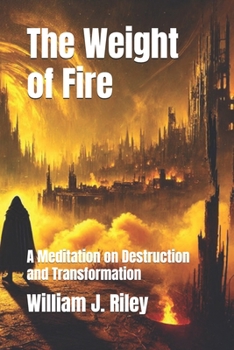
The Weight of Fire: A Meditation on Destruction and Transformation

The Weight of Fire is a masterwork of poetic narrative, a deeply evocative and thematically intricate meditation on destruction, survival, and transformation. It is structured with precision, moving from the visceral immediacy of fire to the lingering weight of its aftermath. The novel is stylistically reminiscent of Claudia Rankine and Ocean Vuong, blending prose and poetry with a seamless, almost elemental rhythm that mirrors the fire itself - both consuming and illuminating.
This is not just a book about fire. It is about memory, trauma, loss, and the ways in which destruction creates space for renewal. It is about what remains after the burning, about the silence left in the wake of disaster, and about the inevitability of what follows. The revelation that The Drifter has been narrating their own journey adds another layer of narrative depth, positioning them as both witness and survivor, both victim and agent of their own fate.
The closing epilogue, where the rains begin to fall, solidifies the thematic trajectory - the inevitability of change, the transition from one form of devastation to another. If The Weight of Fire is about destruction, The Weight of Water promises to be about erasure, memory, and survival in a world that does not stop shifting.
Customer Reviews
ThriftBooks ® and the ThriftBooks ® logo are registered trademarks of Thrift Books Global, LLC
