


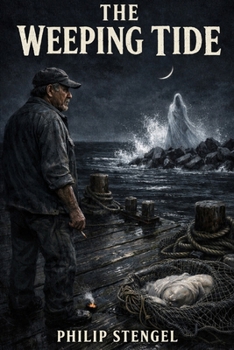
The Weeping Tide

The sea off San Gregorio has always taken what it wants. But after a catastrophic wave tears through the town, the dead do not stay gone. The shoreline begins returning impossible things: a child's shoe left dry above the tide line, voices in the fog, handprints slick with silt, and bodies that rise from floodwater with seawater still pouring from their mouths. What the survivors call disaster slowly reveals itself as something older, crueler, and far more deliberate.
At the center of the ruin is Elena Rojas, a mother who has lost her husband Javier and daughter Marisol to the wave and is still trying to function inside a relief camp built from tarps, lies, and shock. When the dead begin returning in familiar faces and intimate voices, Elena is forced to confront the possibility that the thing haunting the flooded coast is not only feeding on grief. It is using it, shaping itself through mourning, maternal love, and the oldest wound in the town's memory.
With Tom s Aguilar, Luz, and the child called Mudo, Elena follows the trail toward an older coastal anchor point where the thing locals call La Llorona fixed itself to the land. What begins as survival horror widens into a confrontation with grief turned predatory, a tide that recruits the bereaved, and a haunting that wants mothers not merely broken, but remade in its image. The Weeping Tide is folkloric coastal horror about drowned love, tidal memory, and the terror of realizing that the sea does not only keep the dead. Sometimes it teaches them how to come back wrong.
Customer Reviews
ThriftBooks ® and the ThriftBooks ® logo are registered trademarks of Thrift Books Global, LLC
