


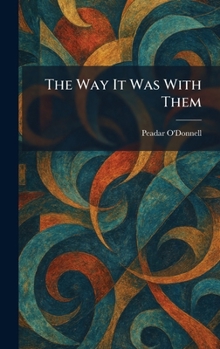
The Way It Was With Them

"The Way It Was With Them" is a powerful work of Irish social realism that captures the rugged life of a fishing community on a remote island off the coast of Donegal. This poignant narrative centers on the Doogan family, particularly the matriarch Mary Doogan, as they navigate the unrelenting challenges of poverty, isolation, and the unpredictable nature of the Atlantic Ocean.
Through a series of evocative vignettes, Peadar O'Donnell portrays the deep-seated resilience and communal solidarity of the islanders. The prose is marked by a stark beauty and an intimate understanding of the traditional way of life, reflecting the author's own roots in the region. The story delves into the spiritual and physical demands of survival, from the dangerous harvesting of kelp to the shared grief and joy that bind the neighbors together.
As a significant contribution to 20th-century Irish literature, "The Way It Was With Them" offers an authentic and unsentimental look at a vanishing world. It remains a testament to the strength of the human spirit in the face of economic hardship and the timeless struggle between man and the elements. This work is essential reading for those interested in the cultural heritage and literary history of Ireland.
This work has been selected by scholars as being culturally important, and is part of the knowledge base of civilization as we know it. This work was reproduced from the original artifact, and remains as true to the original work as possible. Therefore, you may see the original copyright references, library stamps (as most of these works have been housed in our most important libraries around the world), and other notations in the work.
This work is in the public domain in the United States of America, and possibly other nations. Within the United States, you may freely copy and distribute this work, as no entity (individual or corporate) has a copyright on the body of the work.
As a reproduction of a historical artifact, this work may contain missing or blurred pages, poor pictures, errant marks, etc. Scholars believe, and we concur, that this work is important enough to be preserved, reproduced, and made generally available to the public. We appreciate your support of the preservation process, and thank you for being an important part of keeping this knowledge alive and relevant.
Customer Reviews
ThriftBooks ® and the ThriftBooks ® logo are registered trademarks of Thrift Books Global, LLC
