


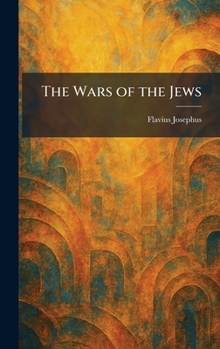
The Wars of the Jews

"The Wars of the Jews" is a definitive eyewitness account of the monumental conflict between the Roman Empire and the Jewish people in the first century CE. Written by the historian Flavius Josephus, a former Jewish military commander who transitioned into the Roman imperial circle, this work provides an unparalleled narrative of the Great Revolt that began in 66 CE. The text meticulously chronicles the geopolitical tensions, the rise of revolutionary factions, and the brutal military campaigns led by the Roman generals Vespasian and Titus.
The narrative reaches its tragic climax with the protracted siege of Jerusalem and the eventual destruction of the Second Temple, an event that fundamentally altered the course of Western history and the development of Judaism. Josephus also details the final stand of the Jewish rebels at the mountain fortress of Masada, offering a harrowing look at the cost of resistance. As one of the most significant historical documents from the ancient world, "The Wars of the Jews" serves as a vital bridge between the biblical era and the Roman age. It remains an essential resource for understanding ancient military strategy, the complexities of Roman provincial rule, and the profound resilience of the Jewish spirit during a period of existential crisis.
This work has been selected by scholars as being culturally important, and is part of the knowledge base of civilization as we know it. This work was reproduced from the original artifact, and remains as true to the original work as possible. Therefore, you may see the original copyright references, library stamps (as most of these works have been housed in our most important libraries around the world), and other notations in the work.
This work is in the public domain in the United States of America, and possibly other nations. Within the United States, you may freely copy and distribute this work, as no entity (individual or corporate) has a copyright on the body of the work.
As a reproduction of a historical artifact, this work may contain missing or blurred pages, poor pictures, errant marks, etc. Scholars believe, and we concur, that this work is important enough to be preserved, reproduced, and made generally available to the public. We appreciate your support of the preservation process, and thank you for being an important part of keeping this knowledge alive and relevant.
Customer Reviews
ThriftBooks ® and the ThriftBooks ® logo are registered trademarks of Thrift Books Global, LLC
