


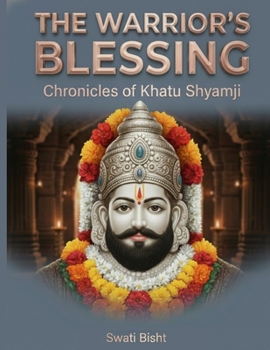
The Warrior's Blessing: Chronicles of Khatu Shyamji

The Warrior's Blessing: Chronicles of Khatu Shyamji
In the vast and complex history of the Mahabharata, amidst the thunder of chariots and the clash of ideologies, one warrior's story stands apart. He possessed the power to end the eighteen-day war of Kurukshetra in the blink of an eye, yet he never released a single arrow against the Kauravas or the Pandavas. Barbarika, the grandson of the mighty Bhima and the son of the forest-king Ghatotkacha, remains the epic's most fascinating paradox: a warrior defined not by his conquests, but by his surrender.
The Warrior's Blessing offers a definitive account of the prince who would become Khatu Shyamji, the presiding deity of millions in the modern age. This book bridges the gap between ancient scriptural history and the vibrant faith seen today in the bustling streets of Rajasthan.
The Legend of the Three Arrows Born of a union between the wind-god's lineage and the raw power of the forest, Barbarika was a prodigy. The narrative traces his austere upbringing under his mother, Maurvi, and his acquisition of the Teen Baan-three infallible arrows granted by the primal Goddesses. These weapons gave him a terrifying efficiency: the ability to mark targets, protect the innocent, and annihilate the opposition in three swift moves.
The Vow That Changed Destiny However, power without restraint is chaos. The book examines the critical vow Barbarika made to his mother: to always be the Haare Ka Sahara (The Support of the Defeated). While noble in spirit, this oath created a strategic nightmare. In a war where the balance of power shifted hourly, Barbarika would have been forced to oscillate between sides, eventually destroying both armies to remain true to his word.
The Divine Intervention Readers are taken to the dusty road leading to Kurukshetra, where Lord Krishna, disguised as a humble Brahmin, intercepted the young warrior. This encounter-featuring the famous test of the Peepal tree leaves-is deconstructed to show how Krishna transformed a potential catastrophe into an act of supreme devotion. The subsequent Sheesh Daan (charity of the head) is not presented merely as a tragedy, but as the moment Barbarika transcended mortality to become the eternal witness of the war.
From Warrior to Deity The final sections of the book explore the transition from the Dwapara Yuga to the Kali Yuga. It details how Krishna, moved by Barbarika's sacrifice, granted him his own name, "Shyam," and promised that he would be worshipped when the world lost its way.
Inside This Book, You Will Find:
The Lineage of Strength: A detailed look at the ancestry of Ghatotkacha and Hidimbi.
The Logic of Sacrifice: Why the "Greatest Warrior" had to be the first casualty for Dharma to survive.
The Modern Pilgrimage: An exploration of the Nishan Yatra, the Phalguna Mela, and the global rise of the Shyam Bhakti movement.
Spiritual Resilience: How the philosophy of "Supporting the Defeated" provides a psychological anchor for those facing their own personal battles today.
The Warrior's Blessing is a tribute to the silent strength of the underdog. It invites the reader to look beyond the battlefield and understand why the head that bowed in sacrifice now stands higher than any throne.
Discover the history, the mystery, and the enduring grace of Khatu Shyamji.
Customer Reviews
ThriftBooks ® and the ThriftBooks ® logo are registered trademarks of Thrift Books Global, LLC
