


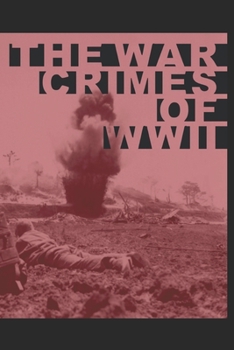
THE WAR CRIMES OF WORLD WAR II

The history of World War II atrocity is often encountered as a collection of names: Auschwitz, Nanjing, Bataan, Katyn, Babyn Yar, Unit 731, Dresden. The Major War Crimes of World War II provides an accessible global framework for understanding the principal systems and episodes of wartime criminality between 1937 and 1945.
Henderson's book begins with a deceptively difficult question: what actually counts as a war crime?
From there it examines Nazi genocide, Operation Reinhard, mass shooting in Eastern Europe, the deliberate destruction of Soviet prisoners of war, occupation reprisals, forced labour, the murder of people with disabilities, persecution of Roma, atrocities committed by Axis-allied regimes, the Katyn massacre, Nanjing, Japanese biological warfare, military sexual coercion, Bataan, Sandakan, Sook Ching, Manila, and end-of-war death marches.
It also addresses one of the subject's most contentious problems: the strategic bombing of cities. Dresden and Tokyo are examined seriously without falsely asserting that every catastrophic act involving civilian casualties possesses the same legal status.
Throughout, the emphasis is on evidence. Readers learn why victim totals vary, how perpetrator documents are evaluated, why archives can remain incomplete, how propaganda can contain genuine evidence, and why absence of prosecution does not automatically establish innocence.
The result is neither an encyclopedia nor a catalogue of suffering. It is a compact reference for readers who want to understand the global pattern of World War II atrocity accurately, responsibly, and without academic obscurity.
Customer Reviews
ThriftBooks ® and the ThriftBooks ® logo are registered trademarks of Thrift Books Global, LLC
