


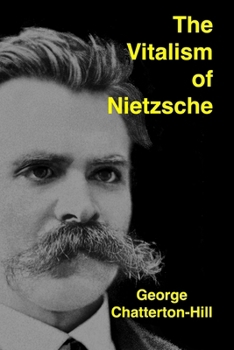
The Vitalism of Nietzsche

The Vitalism of Nietzsche was first published in 1913 and was widely considered the best book about Nietzsche in English. It remains one of the best overviews of the essential elements of Nietzsche's philosophy, especially valuable today because it was written before the two world wars in Europe caused Nietzsche's legacy and ideas to become contested and distorted. Here is Nietzsche as he was first read and understood - as an aristocratic radical, fierce opponent of all leveling and equalizing forces - before movements like existentialism and postmodernism tried to remake him in their own image. Chatterton-Hill masterfully distills the core of Nietzsche's revaluation of values and his distinction between master and slave moralities. This new edition contains an appendix on the influence of Comte de Gobineau on Nietzsche, establishing the essential affinity of their ideas and also reporting the seldom discussed biographical evidence that Nietzsche read Gobineau and perhaps even met him.
"The work of Nietzsche is characterised by one fundamental doctrine: the belief in life in all its plenitude and power ... it is also characterised by one fundamental feature: the sincerity and heroism of the writer's nature, which serves as a guide to the comprehension of his personality. ... He had an inborn love of life, of beauty, of strength; and the life which is strong and beautiful, which manifests itself in all its integrity, which goes out conquering and to conquer, was the life which Nietzsche recognised as the ideal life."
George Chatterton-Hill (1883-1947) was an Irish writer on evolution, sociology and social Darwinism. He is also the author of Heredity and Selection in Sociology.
Related Subjects
PhilosophyCustomer Reviews
ThriftBooks® and the ThriftBooks® logo are registered trademarks of Thrift Books Global, LLC
