


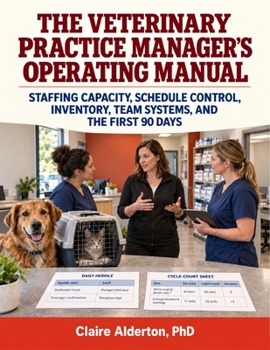
The Veterinary Practice Manager's Operating Manual: Staffing Capacity, Schedule Control, Inventory, Team Systems, and the First 90 Days

The new practice manager needs an operating system, not only a set of keys
Veterinary practices often promote the most reliable technician, receptionist, or associate into management and expect the transition to organize itself. The new manager inherits call-outs, uneven schedules, inventory surprises, owner expectations, team conflict, patient-flow bottlenecks, and burnout risk-usually without a first-week plan or a shared set of operating tools.
The problem this manual solves
The work is difficult because the problems interact. Staffing capacity changes the schedule; the schedule changes patient flow; weak cross-training turns one absence into a service disruption; inventory ownership affects clinical throughput; and a manager without a reporting cadence spends the week reacting without giving the owner a clear view of risk or progress.
A working system, not a loose collection of tips
This manual connects the first ninety days to the systems the manager must sustain afterward. Fictional composite practices demonstrate stakeholder interviews, role boundaries, staffing ratios, demand matching, call-out response, schedule control, huddles, trigger points, cross-training, onboarding, par levels, cycle counts, KPI reporting, workload boundaries, and next-quarter planning.
Follow one connected implementation path
Ten chapters move from taking the manager's seat through the first week, staffing capacity, contingency coverage, schedule and patient-flow control, daily huddles, cross-training and workforce resilience, inventory systems, owner-manager governance, burnout prevention, and the next-quarter plan. Each chapter produces an operating deliverable rather than a general management lesson.
Tools you can use immediately
Completed tools include a 30/60/90 calendar, practice-type staffing worksheet, comparative capacity examples, call-out decision tree, contingency roster, bottleneck map, schedule-capacity dashboard, cross-training matrix, par-level and cycle-count sheets, owner-manager KPI packet, and manager workload check. The examples are filled in so readers can see how decisions are recorded.
Built for the point of work
Use the book intensively during a transition, then keep it as a weekly and monthly management reference. The daily tools support huddles and coverage decisions; the weekly tools expose capacity and inventory drift; and the monthly packet creates a more useful owner conversation grounded in measures, decisions, and named follow-up actions.
Evidence, judgment, and responsible use
This is an operational manual, not veterinary medical, legal, employment, tax, or individualized financial advice. Clinical decisions belong to licensed veterinary professionals, and personnel, compensation, termination, contract, and financial decisions require jurisdiction-specific review by qualified advisors.
Make the next decision easier to see
Move from constant interruption to a visible operating rhythm. Give the team clearer coverage, give the owner a concise view of performance and risk, and give the manager practical boundaries for deciding what must be handled now, what can be delegated, and what belongs in the next review cycle.
The fictional practices span general, specialty, emergency, and mixed-animal settings so readers can see how the same management principles change with demand and staffing realities.
The aim is not a universal ratio; it is a repeatable way to test whether the practice's actual capacity matches the service it is trying to deliver.
The chapter structure supports both a full implementation project and targeted lookup when one urgent decision is already in front of the team.
Customer Reviews
ThriftBooks ® and the ThriftBooks ® logo are registered trademarks of Thrift Books Global, LLC
