


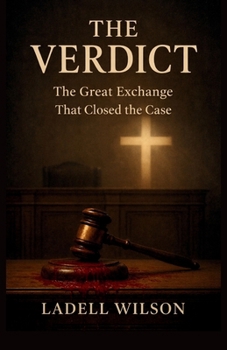
The Verdict: The Great Exchange That Closed the Case
No Customer Reviews

The cross did not begin a process.
It concluded a case. For generations, believers have lived as though the verdict was still pending, confessing, striving, and rehearsing failure as if heaven were still deliberating. But what if the case is already closed? The Verdict approaches the gospel through a legal framework rooted in Scripture, tracing the courtroom narrative that runs from Genesis to the cross. It establishes a single cohesive reality: - Authority was lawfully delegated at creation.
- The fall was a legal breach, not a defeat of God.
- Guilt created standing for accusation.
- Blood was introduced as legal response.
- Justice required equal representation.
- Jesus entered human jurisdiction lawfully and satisfied the demands of the law.
- The record of debt was not suppressed. It was canceled.
- The verdict was rendered once and for all. This is not metaphor. It is legal resolution. If the case is closed, accusation has no standing.
If the debt is canceled, guilt has no authority.
If the verdict is final, believers live from righteousness, not toward it. The Verdict offers a precise, Scripture grounded examination of The Great Exchange and what restored dominion looks like after the cross. It challenges believers to move beyond striving and into settled standing, to live from what has already been finished. The question is no longer whether salvation is possible. The question is whether we will live like it is final.
It concluded a case. For generations, believers have lived as though the verdict was still pending, confessing, striving, and rehearsing failure as if heaven were still deliberating. But what if the case is already closed? The Verdict approaches the gospel through a legal framework rooted in Scripture, tracing the courtroom narrative that runs from Genesis to the cross. It establishes a single cohesive reality: - Authority was lawfully delegated at creation.
- The fall was a legal breach, not a defeat of God.
- Guilt created standing for accusation.
- Blood was introduced as legal response.
- Justice required equal representation.
- Jesus entered human jurisdiction lawfully and satisfied the demands of the law.
- The record of debt was not suppressed. It was canceled.
- The verdict was rendered once and for all. This is not metaphor. It is legal resolution. If the case is closed, accusation has no standing.
If the debt is canceled, guilt has no authority.
If the verdict is final, believers live from righteousness, not toward it. The Verdict offers a precise, Scripture grounded examination of The Great Exchange and what restored dominion looks like after the cross. It challenges believers to move beyond striving and into settled standing, to live from what has already been finished. The question is no longer whether salvation is possible. The question is whether we will live like it is final.
Format:Paperback
Language:English
ISBN:B0GQSYHMFS
ISBN13:9798994870525
Release Date:April 2026
Publisher:Ladell Wilson
Length:60 Pages
Weight:0.15 lbs.
Dimensions:0.1" x 5.1" x 7.8"
Customer Reviews
0 rating
Copyright © 2026 Thriftbooks.com
Terms of Use | Privacy Policy | Do Not Sell/Share My Personal Information | Cookie Policy | Cookie Preferences | Accessibility Statement
ThriftBooks ® and the ThriftBooks ® logo are registered trademarks of Thrift Books Global, LLC
ThriftBooks ® and the ThriftBooks ® logo are registered trademarks of Thrift Books Global, LLC
