


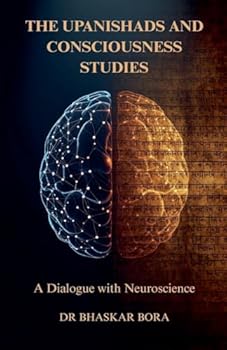
The Upanishads and Consciousness Studies: A Dialogue with Neuroscience

Consciousness remains the most contested frontier in contemporary thought.
Neuroscience maps neural networks with increasing precision. Philosophy of mind debates emergence, physicalism, panpsychism, and the explanatory gap. Yet the central question persists: why does subjective experience exist at all?
The Upanishads and Consciousness Studies offers a disciplined philosophical dialogue between modern neuroscience and the ancient non-dual inquiry of the Upanishads.
This work does not collapse scripture into science, nor does it reduce consciousness to neural mechanics. Instead, it clarifies levels of explanation with methodological precision.
Drawing from analytic philosophy, cognitive neuroscience, and classical Advaita Vedānta, the book explores:
- The Hard Problem of consciousness
- Neural correlates versus ontological explanation
- Self-model theory and structural misidentification
- Avidyā as ontological error
- Emergence and fundamentality
- The nature of ātman and Brahman
- Language limits and ineffability
- The reflexive challenge of studying awareness
Empirical findings are treated descriptively. Metaphysical claims are examined critically. Category errors are identified without rhetoric.
Written for scholars, philosophers, clinicians, and serious students of consciousness studies, this work offers clarity rather than consolation.
The dialogue remains open.
Customer Reviews
ThriftBooks® and the ThriftBooks® logo are registered trademarks of Thrift Books Global, LLC
