


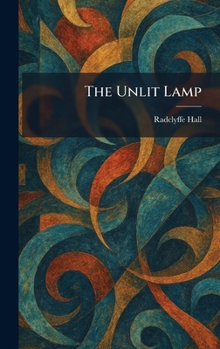
The Unlit Lamp

"The Unlit Lamp" is a poignant and powerful exploration of stifled ambition and the complex bonds of familial duty. The novel follows the life of Joan Ogden, a young woman of exceptional intellect and drive who dreams of escaping her claustrophobic provincial life to study medicine in London. However, her aspirations are constantly undermined by the emotional demands of her manipulative mother, whose dependency binds Joan to a life of quiet resignation.
Through the lens of Joan's internal struggle, Radclyffe Hall examines the limited options available to women at the turn of the century and the tragic waste of potential that results from social and domestic entrapment. A foundational work of early 20th-century literature, the novel delves deep into the psychological toll of repressed identity and the sacrifices made in the name of loyalty. "The Unlit Lamp" stands as a somber reflection on the many lives-talents and passions-that never found the opportunity to shine. It remains a significant work for its sensitive portrayal of female friendship and its unflinching look at the human cost of societal expectations.
This work has been selected by scholars as being culturally important, and is part of the knowledge base of civilization as we know it. This work was reproduced from the original artifact, and remains as true to the original work as possible. Therefore, you may see the original copyright references, library stamps (as most of these works have been housed in our most important libraries around the world), and other notations in the work.
This work is in the public domain in the United States of America, and possibly other nations. Within the United States, you may freely copy and distribute this work, as no entity (individual or corporate) has a copyright on the body of the work.
As a reproduction of a historical artifact, this work may contain missing or blurred pages, poor pictures, errant marks, etc. Scholars believe, and we concur, that this work is important enough to be preserved, reproduced, and made generally available to the public. We appreciate your support of the preservation process, and thank you for being an important part of keeping this knowledge alive and relevant.
Customer Reviews
ThriftBooks ® and the ThriftBooks ® logo are registered trademarks of Thrift Books Global, LLC
