


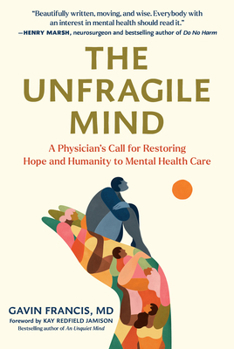
The Unfragile Mind: A Physician's Call for Restoring Hope and Humanity to Mental Health Care

According to the National Institute for Mental Health, over fifty-nine million adults and nearly a fifth of adolescents in the US have been diagnosed with some form of mental illness, with about 50 percent receiving treatment. But the explosion in diagnoses over the last ten years may be doing more harm than good: encouraging patients to define their identities in terms of their deficits, contributing to the overprescribing of pharmaceutical drugs, and saddling a generation with constricting labels that can linger long after symptoms have resolved.
Drawing on thirty years of medical experience, Dr. Gavin Francis, a general practitioner, delves with subtle nuance into the tangled history of psychiatry and the problems that he addresses daily in his patients' lives: mood disorders, trauma, anxiety, and addiction. Expertly reckoning with the historical treatment of mental illness and today's realities, Dr. Francis examines how mental health care has evolved--and how a system built on diagnosing illness and prescribing medication too often forces patients into diagnostic boxes, with labels that too often become self-fulfilling prophecies.
Including case studies and conversations with therapists, psychologists, and psychiatrists, Dr. Francis takes a multifaceted approach to the constantly shifting landscape of mental health to argue that the mind, far from being something rigid and fragile, is in fact dynamic and adaptive, best treated with compassion, flexibility, and curiosity. The Unfragile Mind blends experience, history, and contemporary perspectives in a comprehensive assessment of how we can better understand--and navigate--common but often invisible illnesses.
Customer Reviews
ThriftBooks® and the ThriftBooks® logo are registered trademarks of Thrift Books Global, LLC
