


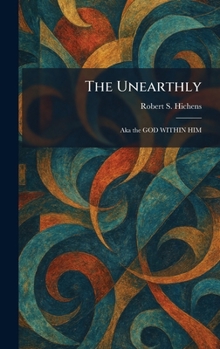
The Unearthly: Aka the GOD WITHIN HIM

"The Unearthly" is a compelling exploration of spiritual yearning and social critique set against the backdrop of post-World War I Europe. Also known as "The God Within Him," the narrative follows the arrival of Peter Kharkoff, a mysterious and serene figure whose presence acts as a silent catalyst for transformation among the disillusioned elite of London and Geneva. As Kharkoff moves through a world marred by cynicism and the hollow pursuits of the upper classes, his seemingly unearthly nature challenges the moral foundations of those he encounters.
Robert Hichens masterfully crafts a psychological drama that examines the tension between worldly ambition and the inner search for meaning. The novel delves into the lives of characters struggling with the aftermath of global conflict, seeking solace in a society that seems to have lost its way. Through sharp observation and a keen understanding of human nature, "The Unearthly" presents a visionary look at the possibility of redemption and the power of a quiet, steadfast spirit in a loud and chaotic world. This work remains a significant example of early 20th-century mystical fiction, offering a profound reflection on the enduring human quest for the divine within.
This work has been selected by scholars as being culturally important, and is part of the knowledge base of civilization as we know it. This work was reproduced from the original artifact, and remains as true to the original work as possible. Therefore, you may see the original copyright references, library stamps (as most of these works have been housed in our most important libraries around the world), and other notations in the work.
This work is in the public domain in the United States of America, and possibly other nations. Within the United States, you may freely copy and distribute this work, as no entity (individual or corporate) has a copyright on the body of the work.
As a reproduction of a historical artifact, this work may contain missing or blurred pages, poor pictures, errant marks, etc. Scholars believe, and we concur, that this work is important enough to be preserved, reproduced, and made generally available to the public. We appreciate your support of the preservation process, and thank you for being an important part of keeping this knowledge alive and relevant.
Customer Reviews
ThriftBooks ® and the ThriftBooks ® logo are registered trademarks of Thrift Books Global, LLC
