


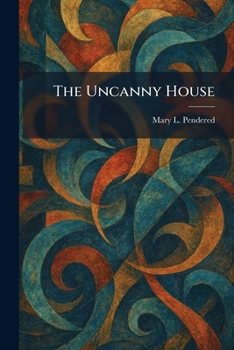
The Uncanny House

Select Format
Select Condition 
Book Overview
"The Uncanny House" is an atmospheric mystery that masterfully blends elements of the supernatural with the classic English country house thriller. Set against the backdrop of a residence shrouded in whispers and unsettling occurrences, the story follows characters drawn into a web of secrets hidden within its walls. Mary L. Pendered weaves a narrative filled with suspense, exploring the thin line between the rational world and the unexplained phenomena that haunt the titular dwelling.
As the plot unfolds, the reader is led through a series of chilling encounters and mounting psychological tension. The novel excels in creating a sense of dread and curiosity, making it a quintessential example of early 20th-century gothic mystery. Pendered's prose captures a specific mood, offering a glimpse into a fascination with spiritualism and the lingering shadows of the past. "The Uncanny House" remains a compelling read for those who appreciate a slow-burn mystery where the setting itself acts as a central, foreboding character.
With its intricate plotting and evocative descriptions, this work stands as a testament to Pendered's ability to craft engaging stories that resonate with fans of traditional ghost stories and detective fiction alike. It invites readers to question what lies behind closed doors and whether some houses truly possess a spirit of their own.
This work has been selected by scholars as being culturally important, and is part of the knowledge base of civilization as we know it. This work was reproduced from the original artifact, and remains as true to the original work as possible. Therefore, you may see the original copyright references, library stamps (as most of these works have been housed in our most important libraries around the world), and other notations in the work.
This work is in the public domain in the United States of America, and possibly other nations. Within the United States, you may freely copy and distribute this work, as no entity (individual or corporate) has a copyright on the body of the work.
As a reproduction of a historical artifact, this work may contain missing or blurred pages, poor pictures, errant marks, etc. Scholars believe, and we concur, that this work is important enough to be preserved, reproduced, and made generally available to the public. We appreciate your support of the preservation process, and thank you for being an important part of keeping this knowledge alive and relevant.
Customer Reviews
ThriftBooks ® and the ThriftBooks ® logo are registered trademarks of Thrift Books Global, LLC
