


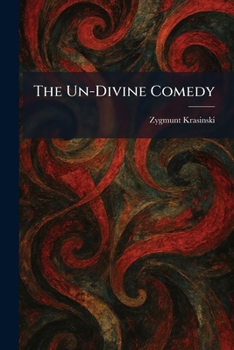
The Un-Divine Comedy

"The Un-Divine Comedy" is a profound and visionary verse drama by Zygmunt Krasi?ski, a cornerstone of Polish Romantic literature. This powerful work explores the turbulent intersection of social revolution, aristocratic decay, and the metaphysical struggle of the individual soul. The narrative centers on Count Henry, a man caught between his poetic ideals and the harsh realities of a crumbling social order. As a brewing class war threatens to dismantle the world he knows, the protagonist must navigate a landscape of moral ambiguity and spiritual crisis.
Krasi?ski's masterpiece is celebrated for its prophetic insight into the nature of mass movements and the inherent contradictions of human ambition. By contrasting the domestic tragedy of a family with the epic scale of a societal uprising, "The Un-Divine Comedy" offers a timeless meditation on the cost of progress and the persistence of faith amidst chaos. Its rich symbolism and dramatic intensity have cemented its status as one of the most significant works of 19th-century European literature, providing a hauntingly relevant critique of political radicalism and the fragility of civilization.
This work has been selected by scholars as being culturally important, and is part of the knowledge base of civilization as we know it. This work was reproduced from the original artifact, and remains as true to the original work as possible. Therefore, you may see the original copyright references, library stamps (as most of these works have been housed in our most important libraries around the world), and other notations in the work.
This work is in the public domain in the United States of America, and possibly other nations. Within the United States, you may freely copy and distribute this work, as no entity (individual or corporate) has a copyright on the body of the work.
As a reproduction of a historical artifact, this work may contain missing or blurred pages, poor pictures, errant marks, etc. Scholars believe, and we concur, that this work is important enough to be preserved, reproduced, and made generally available to the public. We appreciate your support of the preservation process, and thank you for being an important part of keeping this knowledge alive and relevant.
Customer Reviews
ThriftBooks ® and the ThriftBooks ® logo are registered trademarks of Thrift Books Global, LLC
