


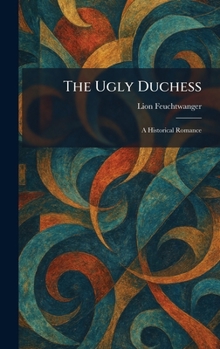
The Ugly Duchess: A Historical Romance

"The Ugly Duchess: A Historical Romance" is a compelling psychological portrait set against the vivid backdrop of 14th-century Europe. The narrative follows the life of Margaret, Duchess of Tyrol, a woman historically remembered for her purported lack of physical beauty. Lion Feuchtwanger masterfully explores the internal and external conflicts of a powerful ruler who possesses a brilliant mind and a formidable spirit, yet remains marginalized by a society obsessed with aesthetic perfection.
As Margaret navigates the treacherous waters of medieval politics, she faces betrayal from rivals, the pressures of dynastic alliances, and the personal isolation that comes with her station. The work delves into the cruelty of the human condition and the tragic irony of a woman who can govern a territory with wisdom but cannot find acceptance in the eyes of her contemporaries. Through rich historical detail and profound character development, the story examines the intersection of power, gender, and perception. "The Ugly Duchess: A Historical Romance" remains a significant work of historical fiction, offering a nuanced look at a misunderstood historical figure and the enduring struggle for dignity in a world governed by appearances.
This work has been selected by scholars as being culturally important, and is part of the knowledge base of civilization as we know it. This work was reproduced from the original artifact, and remains as true to the original work as possible. Therefore, you may see the original copyright references, library stamps (as most of these works have been housed in our most important libraries around the world), and other notations in the work.
This work is in the public domain in the United States of America, and possibly other nations. Within the United States, you may freely copy and distribute this work, as no entity (individual or corporate) has a copyright on the body of the work.
As a reproduction of a historical artifact, this work may contain missing or blurred pages, poor pictures, errant marks, etc. Scholars believe, and we concur, that this work is important enough to be preserved, reproduced, and made generally available to the public. We appreciate your support of the preservation process, and thank you for being an important part of keeping this knowledge alive and relevant.
Customer Reviews
ThriftBooks ® and the ThriftBooks ® logo are registered trademarks of Thrift Books Global, LLC
