


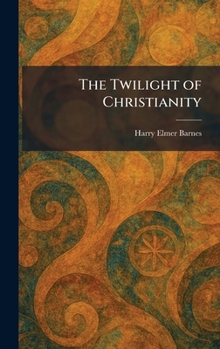
The Twilight of Christianity

"The Twilight of Christianity" is a provocative and scholarly critique of traditional religious belief in the modern age. Written by the influential historian and sociologist Harry Elmer Barnes, this work examines the challenges posed to orthodox Christianity by the rapid advancements of science, historical criticism, and the shifting social landscape of the early 20th century. Barnes argues that the traditional supernatural foundations of the faith have become increasingly incompatible with the intellectual rigor of a rational, empirical world.
Throughout the text, the author explores the historical evolution of Christian dogma, contrasting ancient mythology with the emerging secular ethics of his time. He advocates for a transition toward a new secular humanism that prioritizes human well-being and social progress over theological adherence. By analyzing the sociological impact of religion, the book provides a comprehensive overview of why the author believed the traditional ecclesiastical structure was entering its final phase.
As a significant contribution to the secularist and rationalist movements, "The Twilight of Christianity" remains a vital document for those interested in the history of religious thought, the development of American humanism, and the enduring tension between faith and reason. It serves as both a historical snapshot of intellectual dissent and a rigorous call for an enlightened, scientifically-informed society.
This work has been selected by scholars as being culturally important, and is part of the knowledge base of civilization as we know it. This work was reproduced from the original artifact, and remains as true to the original work as possible. Therefore, you may see the original copyright references, library stamps (as most of these works have been housed in our most important libraries around the world), and other notations in the work.
This work is in the public domain in the United States of America, and possibly other nations. Within the United States, you may freely copy and distribute this work, as no entity (individual or corporate) has a copyright on the body of the work.
As a reproduction of a historical artifact, this work may contain missing or blurred pages, poor pictures, errant marks, etc. Scholars believe, and we concur, that this work is important enough to be preserved, reproduced, and made generally available to the public. We appreciate your support of the preservation process, and thank you for being an important part of keeping this knowledge alive and relevant.
Customer Reviews
ThriftBooks ® and the ThriftBooks ® logo are registered trademarks of Thrift Books Global, LLC
