


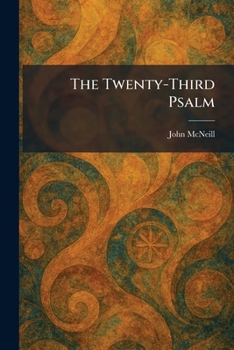
The Twenty-Third Psalm

"The Twenty-Third Psalm" is a profound and moving devotional study of one of the most cherished passages in the Bible. Written by the celebrated Scottish evangelist John McNeill, this work offers a comforting and insightful exploration of the "Shepherd's Psalm," guiding readers through its timeless verses with warmth and spiritual depth.
Throughout the text, McNeill brings to life the rich imagery of green pastures, still waters, and the valley of the shadow of death. He examines the deep personal connection between the Divine Shepherd and His flock, emphasizing themes of providence, protection, and eternal hope. His reflections are designed to provide spiritual nourishment and encouragement to those facing the trials and triumphs of life.
Ideal for both personal meditation and group study, "The Twenty-Third Psalm" captures the essence of faith and the enduring promise of God's presence. McNeill's eloquent prose and heartfelt interpretation ensure that this classic work remains a valuable resource for anyone seeking a closer understanding of this foundational biblical text.
This work has been selected by scholars as being culturally important, and is part of the knowledge base of civilization as we know it. This work was reproduced from the original artifact, and remains as true to the original work as possible. Therefore, you may see the original copyright references, library stamps (as most of these works have been housed in our most important libraries around the world), and other notations in the work.
This work is in the public domain in the United States of America, and possibly other nations. Within the United States, you may freely copy and distribute this work, as no entity (individual or corporate) has a copyright on the body of the work.
As a reproduction of a historical artifact, this work may contain missing or blurred pages, poor pictures, errant marks, etc. Scholars believe, and we concur, that this work is important enough to be preserved, reproduced, and made generally available to the public. We appreciate your support of the preservation process, and thank you for being an important part of keeping this knowledge alive and relevant.
Customer Reviews
ThriftBooks ® and the ThriftBooks ® logo are registered trademarks of Thrift Books Global, LLC
