


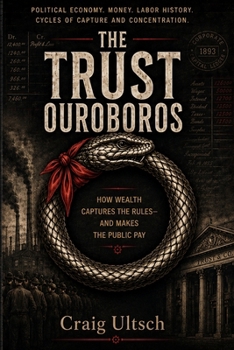
THE TRUST OUROBOROS: How Wealth Captures the Rules—and Makes the Public Pay

Wealth does more than buy things. It buys time, information, expertise, access, and the ability to remain in the room while rules are being written.
The Trust Ouroboros follows that relationship through American history-from Alexander Hamilton's public-credit system and the Whiskey Rebellion to company towns, the Mine Wars, railroads, the robber barons, Teapot Dome, organized labor, and the modern concentration of wealth.
The argument is not that every fortune is corrupt, every government official is captured, or every market outcome is rigged. It is that accumulated economic power can become political capacity. A favorable rule creates wealth. That wealth purchases greater access to the next rule. Capital feeds influence, influence feeds capital, and the snake begins to consume its own tail.
But concentrated power is not the only force capable of organizing.
The history of the red-bandanna miners, unions, antitrust law, public institutions, and democratic reform shows what happens when ordinary people recognize their common interests and build countervailing power of their own.
The Trust Ouroboros is ultimately a call for citizens to know what their elected representatives are doing in their name, understand who benefits when rules change, organize rather than remain isolated, and hold those entrusted with public power accountable between elections-not merely on Election Day.
The question is not whether wealth should exist.
The question is whether society governs wealth, or wealth governs society.
Customer Reviews
ThriftBooks ® and the ThriftBooks ® logo are registered trademarks of Thrift Books Global, LLC
