


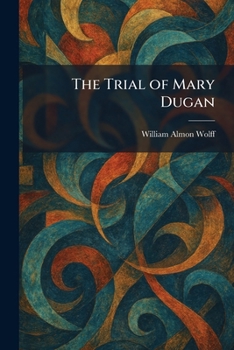
The Trial of Mary Dugan

Select Format
Select Condition 
Book Overview
"The Trial of Mary Dugan" is a gripping courtroom drama that captures the tension and spectacle of a high-profile murder case in 1920s New York. When Mary Dugan, a beautiful Follies girl, is accused of the brutal murder of her wealthy benefactor, Edgar Rice, the stage is set for a sensational legal battle. The evidence against her seems insurmountable, and with her life hanging in the balance, the trial becomes a desperate search for the truth hidden behind a web of scandal and secrets.
Written by William Almon Wolff and based on the acclaimed stage play, this narrative masterfully navigates the intricacies of the legal system and the human emotions that drive it. As witnesses testify and shocking revelations emerge, the reader is drawn into the claustrophobic atmosphere of the courtroom, where every word could mean the difference between freedom and the electric chair. A pioneering work in the legal thriller genre, "The Trial of Mary Dugan" remains a compelling exploration of justice, loyalty, and the price of survival in the urban jungle. This classic tale of suspense highlights the vulnerabilities of those caught in the glare of public scrutiny and the dramatic twists that define the search for innocence.
This work has been selected by scholars as being culturally important, and is part of the knowledge base of civilization as we know it. This work was reproduced from the original artifact, and remains as true to the original work as possible. Therefore, you may see the original copyright references, library stamps (as most of these works have been housed in our most important libraries around the world), and other notations in the work.
This work is in the public domain in the United States of America, and possibly other nations. Within the United States, you may freely copy and distribute this work, as no entity (individual or corporate) has a copyright on the body of the work.
As a reproduction of a historical artifact, this work may contain missing or blurred pages, poor pictures, errant marks, etc. Scholars believe, and we concur, that this work is important enough to be preserved, reproduced, and made generally available to the public. We appreciate your support of the preservation process, and thank you for being an important part of keeping this knowledge alive and relevant.
Customer Reviews
ThriftBooks ® and the ThriftBooks ® logo are registered trademarks of Thrift Books Global, LLC
