


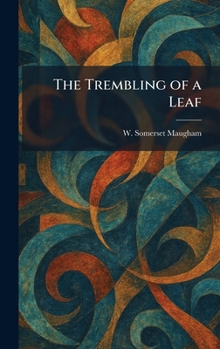
The Trembling of a Leaf

"The Trembling of a Leaf" is a masterful collection of short stories by W. Somerset Maugham that explores the psychological and moral complexities of Westerners living in the South Sea Islands. Set against the lush, evocative backdrops of Samoa, Tahiti, and other remote outposts, these narratives delve into the profound shifts that occur when individuals are removed from the familiar structures of European society and face the isolation of the tropics.
The collection includes some of Maugham's most enduring works, such as the famous story "Rain," which features the iconic character Sadie Thompson and examines the conflict between religious zealotry and human frailty. Each story in this volume captures a specific moment of transition-the "trembling of a leaf"-where fate, desire, or circumstance permanently alters the course of a life. Maugham's unflinching gaze and sophisticated prose offer a compelling look at the cultural tensions, romantic disillusionments, and moral decay inherent in the colonial experience.
Rich in atmosphere and deep in character study, "The Trembling of a Leaf" remains a cornerstone of 20th-century literature. It is an essential read for those drawn to classic fiction that investigates the darker, more intricate corners of the human heart in an exotic and unforgiving landscape.
This work has been selected by scholars as being culturally important, and is part of the knowledge base of civilization as we know it. This work was reproduced from the original artifact, and remains as true to the original work as possible. Therefore, you may see the original copyright references, library stamps (as most of these works have been housed in our most important libraries around the world), and other notations in the work.
This work is in the public domain in the United States of America, and possibly other nations. Within the United States, you may freely copy and distribute this work, as no entity (individual or corporate) has a copyright on the body of the work.
As a reproduction of a historical artifact, this work may contain missing or blurred pages, poor pictures, errant marks, etc. Scholars believe, and we concur, that this work is important enough to be preserved, reproduced, and made generally available to the public. We appreciate your support of the preservation process, and thank you for being an important part of keeping this knowledge alive and relevant.
Customer Reviews
ThriftBooks ® and the ThriftBooks ® logo are registered trademarks of Thrift Books Global, LLC
