


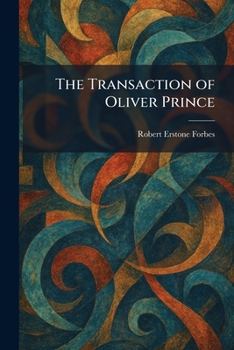
The Transaction of Oliver Prince

Select Format
Select Condition 
Book Overview
"The Transaction of Oliver Prince" is a captivating mystery and adventure novel that exemplifies the spirited storytelling of the early twentieth century. The narrative follows the titular character, Oliver Prince, a young man of modest means whose life takes a sudden and dramatic turn following a mysterious financial arrangement. Thrust into a world of high-stakes intrigue and unexpected complications, Prince must navigate a series of challenging encounters that test his wit and resolve.
Authored by Robert Erstone Forbes, the work blends elements of the social comedy with the pace of a modern thriller. Set against the backdrop of the post-war era, the story explores themes of fortune, identity, and the moral ambiguities of the business world. Forbes's sharp prose and keen eye for character dynamics create a vivid portrait of a man caught between his ordinary past and an extraordinary future.
This classic work remains a significant example of popular fiction from the 1920s, offering readers a window into the cultural and literary sensibilities of the period. "The Transaction of Oliver Prince" is an engaging read for those interested in the evolution of the adventure genre and the enduring appeal of the mystery novel.
This work has been selected by scholars as being culturally important, and is part of the knowledge base of civilization as we know it. This work was reproduced from the original artifact, and remains as true to the original work as possible. Therefore, you may see the original copyright references, library stamps (as most of these works have been housed in our most important libraries around the world), and other notations in the work.
This work is in the public domain in the United States of America, and possibly other nations. Within the United States, you may freely copy and distribute this work, as no entity (individual or corporate) has a copyright on the body of the work.
As a reproduction of a historical artifact, this work may contain missing or blurred pages, poor pictures, errant marks, etc. Scholars believe, and we concur, that this work is important enough to be preserved, reproduced, and made generally available to the public. We appreciate your support of the preservation process, and thank you for being an important part of keeping this knowledge alive and relevant.
Customer Reviews
ThriftBooks ® and the ThriftBooks ® logo are registered trademarks of Thrift Books Global, LLC
