


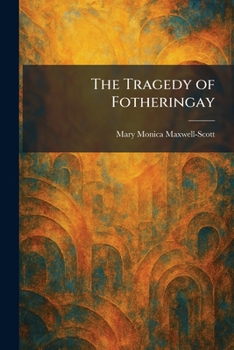
The Tragedy of Fotheringay

"The Tragedy of Fotheringay" is a compelling and deeply researched examination of the final chapters in the life of Mary, Queen of Scots. Centered on her trial and execution at Fotheringay Castle, this work delves into the political tensions and personal drama that defined the end of the Stuart queen's turbulent reign. Mary Monica Maxwell-Scott utilizes a variety of historical sources, including contemporary accounts and personal journals, to reconstruct the somber atmosphere of Mary's captivity and her steadfast dignity in the face of death.
The narrative explores the complex relationship between Mary and her cousin, Queen Elizabeth I, and the religious and dynastic struggles that shaped 16th-century Britain. By focusing on the tragedy itself, the author provides readers with a vivid portrait of Mary's resilience and the legal proceedings that led to her controversial demise. This book remains an essential resource for those interested in Scottish history, Tudor politics, and the enduring legacy of the ill-fated queen. Maxwell-Scott's sympathetic yet meticulous approach brings a human perspective to a pivotal moment that altered the course of British history forever.
This work has been selected by scholars as being culturally important, and is part of the knowledge base of civilization as we know it. This work was reproduced from the original artifact, and remains as true to the original work as possible. Therefore, you may see the original copyright references, library stamps (as most of these works have been housed in our most important libraries around the world), and other notations in the work.
This work is in the public domain in the United States of America, and possibly other nations. Within the United States, you may freely copy and distribute this work, as no entity (individual or corporate) has a copyright on the body of the work.
As a reproduction of a historical artifact, this work may contain missing or blurred pages, poor pictures, errant marks, etc. Scholars believe, and we concur, that this work is important enough to be preserved, reproduced, and made generally available to the public. We appreciate your support of the preservation process, and thank you for being an important part of keeping this knowledge alive and relevant.
Customer Reviews
ThriftBooks ® and the ThriftBooks ® logo are registered trademarks of Thrift Books Global, LLC
