


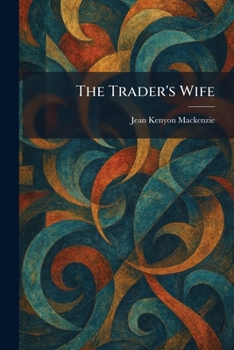
The Trader's Wife

"The Trader's Wife" is a poignant and evocative work of historical fiction set against the backdrop of the West African coast in the mid-nineteenth century. Written by Jean Kenyon Mackenzie, who drew from her deep familiarity with the region, the narrative follows Lucy, a sensitive young woman from New England who marries a trader and leaves her familiar world for the unfamiliar shores of Africa. Through Lucy's eyes, the story explores the profound psychological and moral challenges of life in a colonial trading outpost.
The work delves into themes of isolation, cultural misunderstanding, and the brutal reality of the slave trade that still haunted the coast. As Lucy grapples with her new environment and the complexities of her husband's profession, Mackenzie provides a vivid portrayal of the landscape and the various people who inhabit it. "The Trader's Wife" is noted for its delicate prose and its insightful examination of a woman's conscience when confronted with the ethical dilemmas of a bygone era. It remains a significant literary reflection on the human condition and the meeting of disparate cultures during a period of intense historical change.
This work has been selected by scholars as being culturally important, and is part of the knowledge base of civilization as we know it. This work was reproduced from the original artifact, and remains as true to the original work as possible. Therefore, you may see the original copyright references, library stamps (as most of these works have been housed in our most important libraries around the world), and other notations in the work.
This work is in the public domain in the United States of America, and possibly other nations. Within the United States, you may freely copy and distribute this work, as no entity (individual or corporate) has a copyright on the body of the work.
As a reproduction of a historical artifact, this work may contain missing or blurred pages, poor pictures, errant marks, etc. Scholars believe, and we concur, that this work is important enough to be preserved, reproduced, and made generally available to the public. We appreciate your support of the preservation process, and thank you for being an important part of keeping this knowledge alive and relevant.
Customer Reviews
ThriftBooks ® and the ThriftBooks ® logo are registered trademarks of Thrift Books Global, LLC
