


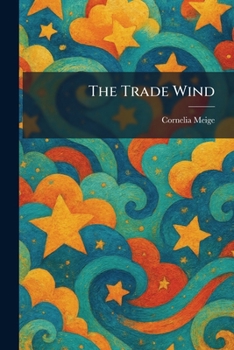
The Trade Wind

Select Format
Select Condition 
Book Overview
"The Trade Wind" is a classic historical adventure that carries readers across the high seas during the turbulent years preceding the American Revolution. The story follows young David Dennison, who leaves the safety of his home to follow in his father's footsteps aboard a merchant vessel. As he navigates the vast Atlantic, David encounters the many perils of the maritime world, from the constant threat of privateers to the shifting political tides that would eventually ignite the fight for American independence.
Cornelia Meigs masterfully blends rich historical detail with the thrill of nautical discovery, offering a vivid portrayal of the merchant trade and the bravery required of those who sailed during the 18th century. Through David's eyes, readers experience the tension of the colonial era and the timeless allure of the ocean. The narrative captures the spirit of exploration and the high-stakes drama of life at sea, making "The Trade Wind" an enduring tale of courage and coming of age. This work stands as a significant contribution to early 20th-century historical literature, appealing to those who cherish tales of high-seas adventure and the foundational history of the United States.
This work has been selected by scholars as being culturally important, and is part of the knowledge base of civilization as we know it. This work was reproduced from the original artifact, and remains as true to the original work as possible. Therefore, you may see the original copyright references, library stamps (as most of these works have been housed in our most important libraries around the world), and other notations in the work.
This work is in the public domain in the United States of America, and possibly other nations. Within the United States, you may freely copy and distribute this work, as no entity (individual or corporate) has a copyright on the body of the work.
As a reproduction of a historical artifact, this work may contain missing or blurred pages, poor pictures, errant marks, etc. Scholars believe, and we concur, that this work is important enough to be preserved, reproduced, and made generally available to the public. We appreciate your support of the preservation process, and thank you for being an important part of keeping this knowledge alive and relevant.
Customer Reviews
ThriftBooks ® and the ThriftBooks ® logo are registered trademarks of Thrift Books Global, LLC
