


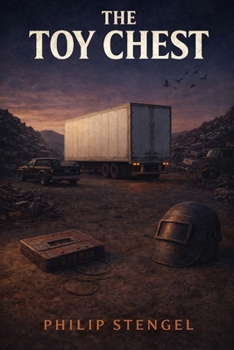
The Toy Chest

When the van dies on a desert highway, Jess Monroe, Eddie Tran, Liam Mercer, and Chloe Lane do what stranded people always do: they walk toward the nearest sign of help. The road leads them past an abandoned gas station, a carved warning about the Box Man, and into Oakhaven, a town so practiced in silence it has learned to treat missing people like weather. Mechanic Mark Dalton knows more than he says. The junkyard east of town holds more than scrap. And somewhere beyond the rust and heat waits a white trailer built not for transport, but for procedure.
What follows is not a simple slasher story, but a chamber-horror descent into captivity, performance, and authorship through violence. The man in the welder's mask does not kill in chaos. He arranges. He records. He turns bodies into compositions, rooms into stages, and survivors into unwilling witnesses. As the band is broken apart one by one, the true horror of The Toy Chest comes into focus: the killer does not want only victims. He wants an audience, an archive, and eventually a voice to help preserve his work.
By the novel's later movement, Jess is no longer fighting only to stay alive. She is being forced into a more degrading role inside the chrome-walled machinery of the Toy Chest, where tapes, microphones, blank labels, and ritualized recordings turn survival itself into complicity. The Toy Chest is psychological horror about captivity, spectacle, trauma, and the terror of discovering that some killers do not merely want to destroy the body. They want to curate what remains.
Customer Reviews
ThriftBooks ® and the ThriftBooks ® logo are registered trademarks of Thrift Books Global, LLC
