


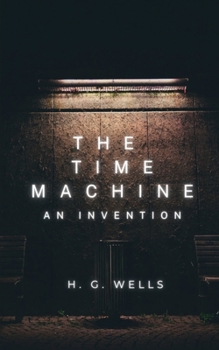
The Time Machine

The Time Machine is a science fiction novella by H. G. Wells, published in 1895. The work is generally credited with the popularization of the concept of time travel by using a vehicle or device to travel purposely and selectively forward or backward through time. The term "time machine", coined by Wells, is now almost universally used to refer to such a vehicle or device. Utilizing a frame story set in then-present Victorian England, Wells' text focuses on a recount of the otherwise anonymous Time Traveller's journey into the far future. A work of future history and speculative evolution, Time Machine is interpreted in modern times as a commentary on the increasing inequality and class divisions of Wells' era, which he projects as giving rise to two separate human species: the fair, childlike Eloi, and the savage, simian Morlocks, distant descendants of the contemporary upper and lower classes respectively. It is believed that Wells' depiction of the Eloi as a race living in plenitude and abandon was inspired by the utopic romance novel News from Nowhere (1890), though Wells' universe in the novel is notably more savage and brutal.
Format:Paperback
Language:English
ISBN:8196076908
ISBN13:9788196076900
Release Date:December 2022
Publisher:Avarang Books
Length:114 Pages
Weight:0.29 lbs.
Dimensions:0.3" x 5.0" x 8.0"
Age Range:10 to 17 years
Grade Range:Grades 5 to 12
Customer Reviews
1 rating
I saw the movie first. The difference from the book was a surprise.
Published by bernie4444 , 9 days ago
An unnamed time traveler sees the future of man (802,701 A.D.) and then the inevitable future of the world. He tells his tale in detail. Some of the details are fascinating as the traveler comes to discover the secret of the results of social stratification over centuries, which eventually creates two separate species of humans. Which species is more human? Can anything be done to prevent or correct this?
I grew up on the Rod Taylor /George Pal movie. When I started the book, I expected it to be slightly different, with a tad more complexity than with most book/movie relationships. I was surprised to find the reason for the breakup of the species (Morlock and Eloi) was class Vs. atomic (in later movie versions it was political). I could live with that, but to find that some little pink thing replaced Yvette Mimieux was too much.
After all the surprises, we can look at the story as unique in its time, first published in book form in 1895, yet the message is timeless. The writing and timing could not have been better. And the ending was certainly appropriate for the world that he describes. If the story were written today, the species division would be based on eugenics.
Copyright © 2026 Thriftbooks.com
Terms of Use | Privacy Policy | Do Not Sell/Share My Personal Information | Cookie Policy | Cookie Preferences | Accessibility Statement
ThriftBooks ® and the ThriftBooks ® logo are registered trademarks of Thrift Books Global, LLC
ThriftBooks ® and the ThriftBooks ® logo are registered trademarks of Thrift Books Global, LLC
