


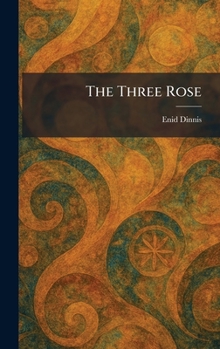
The Three Rose

"The Three Rose" is a compelling historical and hagiographical work by Enid Dinnis that explores the life and spiritual legacy of Saint Rose of Lima, the first canonized saint of the Americas. Set against the vibrant backdrop of seventeenth-century Peru, the narrative follows the journey of Isabel Flores de Oliva, whose profound devotion and ascetic life earned her the name "Rose." Dinnis employs her characteristic mystical storytelling style to delve into the interior life of the saint, portraying her struggles, her intense piety, and her deep connection to the divine.
The work goes beyond a mere biographical account, weaving a tapestry of faith and sacrifice that highlights the cultural and religious atmosphere of colonial Lima. Through vivid prose, Dinnis captures the essence of Saint Rose's character-her humility, her commitment to the poor, and her unwavering focus on spiritual perfection despite the pressures of her society. "The Three Rose" remains a significant piece of Catholic literature, offering readers both a historical window into the Spanish colonies and a timeless reflection on the nature of sanctity and devotion. It serves as an inspiring portrait of a woman who chose a path of radical faith, leaving an indelible mark on the religious history of the New World.
This work has been selected by scholars as being culturally important, and is part of the knowledge base of civilization as we know it. This work was reproduced from the original artifact, and remains as true to the original work as possible. Therefore, you may see the original copyright references, library stamps (as most of these works have been housed in our most important libraries around the world), and other notations in the work.
This work is in the public domain in the United States of America, and possibly other nations. Within the United States, you may freely copy and distribute this work, as no entity (individual or corporate) has a copyright on the body of the work.
As a reproduction of a historical artifact, this work may contain missing or blurred pages, poor pictures, errant marks, etc. Scholars believe, and we concur, that this work is important enough to be preserved, reproduced, and made generally available to the public. We appreciate your support of the preservation process, and thank you for being an important part of keeping this knowledge alive and relevant.
Customer Reviews
ThriftBooks ® and the ThriftBooks ® logo are registered trademarks of Thrift Books Global, LLC
