


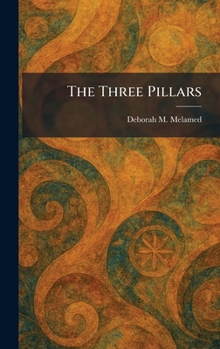
The Three Pillars

"The Three Pillars" is an insightful and practical guide to the spiritual and ethical foundations of the Jewish home. This work explores the essential components of a Jewish life, traditionally centered on the concepts of learning, prayer, and acts of loving-kindness. It serves as a comprehensive resource for understanding the traditions, rituals, and values that define the domestic sphere within the Jewish faith.
The text provides detailed guidance on the observance of the Sabbath, the celebration of major festivals, and the maintenance of a kosher household. Beyond mere ritual, Deborah M. Melamed emphasizes the moral and educational responsibilities inherent in Jewish family life, positioning the home as a sanctuary of faith and character building. By blending practical instructions with theological insights, "The Three Pillars" offers readers a window into the cultural and religious identity of the Jewish community in the early twentieth century. This work remains a significant historical document and a testament to the enduring role of women in preserving and transmitting religious heritage and values through generations.
This work has been selected by scholars as being culturally important, and is part of the knowledge base of civilization as we know it. This work was reproduced from the original artifact, and remains as true to the original work as possible. Therefore, you may see the original copyright references, library stamps (as most of these works have been housed in our most important libraries around the world), and other notations in the work.
This work is in the public domain in the United States of America, and possibly other nations. Within the United States, you may freely copy and distribute this work, as no entity (individual or corporate) has a copyright on the body of the work.
As a reproduction of a historical artifact, this work may contain missing or blurred pages, poor pictures, errant marks, etc. Scholars believe, and we concur, that this work is important enough to be preserved, reproduced, and made generally available to the public. We appreciate your support of the preservation process, and thank you for being an important part of keeping this knowledge alive and relevant.
Customer Reviews
ThriftBooks ® and the ThriftBooks ® logo are registered trademarks of Thrift Books Global, LLC
