


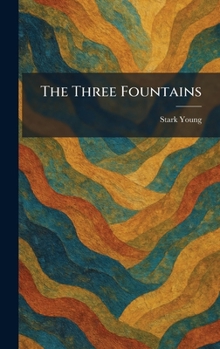
The Three Fountains

"The Three Fountains" is a sophisticated collection of essays and travel sketches by Stark Young that captures the cultural and aesthetic essence of Italy through a refined literary lens. Written during a period of intense American interest in European heritage, the work presents a series of evocative meditations on the landscapes, art, and people of the Mediterranean. Young explores the deep-seated connections between physical place and the human spirit, contrasting the ancient, vibrant traditions of Italy with the sensibilities of the English-speaking world.
The book functions as more than a mere travelogue; it is a philosophical exploration of how history and art inform modern identity. Through keen observation and lyrical prose, Young guides the reader through Italian cities and countrysides, offering profound insights into the nature of beauty and the enduring power of cultural tradition. "The Three Fountains" remains a significant example of early twentieth-century literary travel writing, celebrated for its stylistic elegance and its ability to transport the reader into the heart of the Italian experience. It is an essential work for those interested in the intersections of travel, aesthetics, and the timeless allure of the Old World.
This work has been selected by scholars as being culturally important, and is part of the knowledge base of civilization as we know it. This work was reproduced from the original artifact, and remains as true to the original work as possible. Therefore, you may see the original copyright references, library stamps (as most of these works have been housed in our most important libraries around the world), and other notations in the work.
This work is in the public domain in the United States of America, and possibly other nations. Within the United States, you may freely copy and distribute this work, as no entity (individual or corporate) has a copyright on the body of the work.
As a reproduction of a historical artifact, this work may contain missing or blurred pages, poor pictures, errant marks, etc. Scholars believe, and we concur, that this work is important enough to be preserved, reproduced, and made generally available to the public. We appreciate your support of the preservation process, and thank you for being an important part of keeping this knowledge alive and relevant.
Related Subjects
History Literary Literary Criticism & Collections Literature Literature & Fiction TravelCustomer Reviews
ThriftBooks ® and the ThriftBooks ® logo are registered trademarks of Thrift Books Global, LLC
